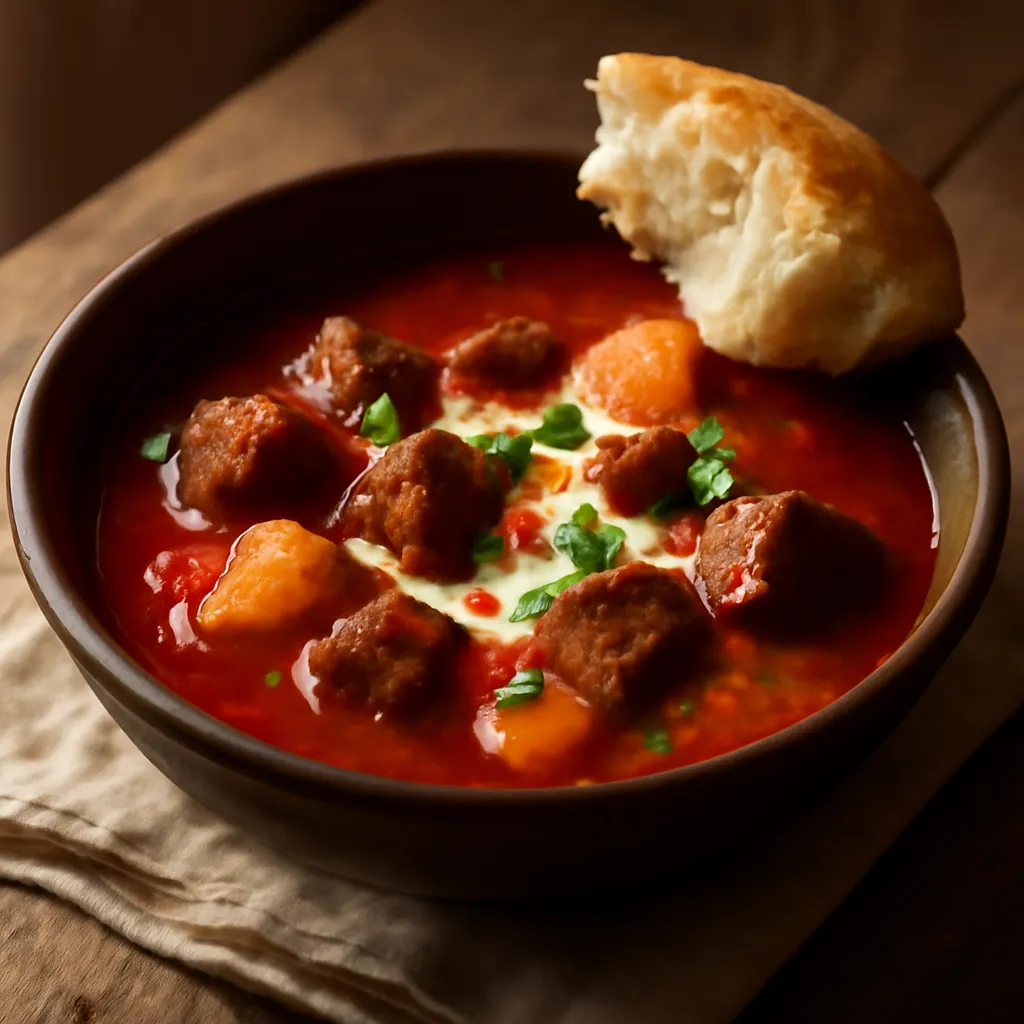
This is goulash the Hungarian way: a soupy, deeply spiced beef stew built on a mountain of sweet paprika, slow-cooked onions and a whisper of caraway. It's honest, rustic and gets better the next day. Serve with bread or nokedli to mop up every drop.
Real goulash isn’t a thick brown stew; it’s a brothy, paprika-stained bowl of tender beef, sweet onions and soft potato. The trick is patience and good Hungarian paprika, added off the heat so it never turns bitter. Nothing fancy, just proper technique and time. This is the version worth cooking on a cold Sunday.
Ingredients
Method
- Melt the lard in a large heavy casserole over a medium heat. Add the onions with a pinch of salt and cook gently for 12-15 minutes, stirring often, until soft, golden and jammy. Don't rush this; the onions are the backbone of the dish.
- Stir in the garlic, caraway and chopped peppers and cook for another 2 minutes until fragrant. Now pull the pan off the heat completely. This matters: paprika scorches and turns bitter over direct heat.
- Off the heat, stir in both paprikas and the tomato puree, coating the onions in a deep red paste. Return to a low heat for barely a minute, then add the beef and stir to coat every piece.
- Add the chopped tomatoes, bay leaves and enough hot stock to just cover the meat. Bring to a gentle simmer, then cover and cook very slowly for 90 minutes, stirring occasionally and topping up with stock if it looks dry. You want a lazy bubble, not a rolling boil.
- Add the potatoes and any remaining stock and continue to simmer, uncovered now, for a further 30 minutes until the potatoes are tender and the beef pulls apart easily with a spoon and is cooked through with no pink or chew left.
- Taste and adjust with salt and plenty of black pepper. The broth should be brick-red, glossy and rich; if it's too thin, simmer a few minutes longer, and if too thick, loosen with a splash of stock.
- Fish out the bay leaves and let the goulash rest off the heat for 10 minutes before serving piping hot in deep bowls.
Serve it with
- Crusty white bread or a fresh baguette
- Nokedli or buttered egg noodles
- A dollop of soured cream
- Pickled cucumbers or gherkins
- A sprinkle of fresh parsley
Why this works
Adding paprika off the heat protects its sweet, fruity flavour from scorching, while slow-cooked onions melt into the broth to give body without any flour or thickener.
Common swaps
- Use beef brisket or braising steak if shin is hard to find
- Swap lard for oil to keep it dairy-free
- No caraway? A pinch of cumin gives a similar warmth
- Add a diced carrot with the onions for a touch of sweetness
- Leave out the potatoes and serve over noodles instead
Common mistakes to avoid
- Frying the paprika over direct heat, which makes it bitter and dull
- Rushing the onions; they need to fully soften to build flavour
- Boiling hard instead of a gentle simmer, which toughens the beef
- Using stale, faded paprika, which robs the dish of its signature colour and taste
Storage, freezing & reheating
Storage: Cool quickly and keep covered in the fridge for up to 3 days; the flavour deepens overnight.
Freezing: Freezes very well for up to 3 months, though the potatoes soften slightly on thawing. Cool fully, then freeze in portions.
Reheating: Reheat gently in a pan over a low heat, adding a splash of stock or water, until piping hot throughout.
Estimated nutrition
Per serving, estimated from typical ingredient values — not a substitute for precise dietary calculation.
| Calories | 480 kcal |
|---|---|
| Protein | 38 g |
| Carbohydrate | 26 g |
| Fat | 25 g |