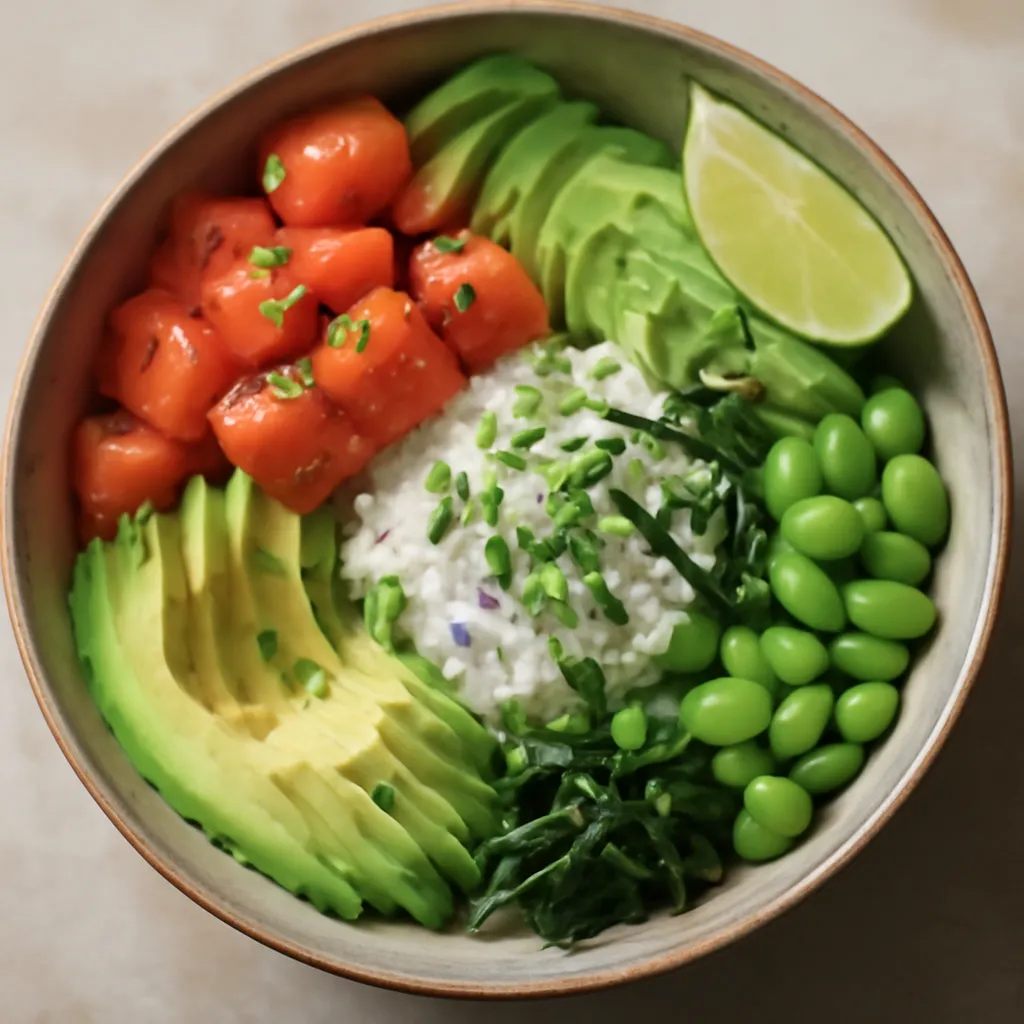
Cubes of sashimi-grade salmon are marinated in a bright soy, sesame and lime dressing, then piled over seasoned sushi rice with avocado, cucumber and edamame. It is fresh, savoury and endlessly customisable — the ultimate quick, wholesome bowl.
Poke (say it poh-kay) is Hawaii’s answer to fast food: cubes of glossy raw fish tossed in a punchy soy-sesame dressing and served over rice. This version uses sashimi-grade salmon, seasoned sushi rice and a rainbow of toppings so every forkful lands somewhere different. It comes together in the time it takes the rice to cool.
Ingredients
Method
- Rinse the sushi rice under cold water until it runs clear, then cook according to the packet instructions. While it cooks, warm the rice vinegar and sugar with a pinch of salt until the sugar dissolves.
- Tip the cooked rice into a bowl, fold through the seasoned vinegar and spread it out to cool to just-warm or room temperature. Don't skip this — properly seasoned, cooled rice is the backbone of a good poke bowl.
- Boil the edamame for 4-5 minutes until tender, then drain and cool under cold water.
- Pat the salmon dry and cut it into neat 2 cm cubes with a sharp knife. Keep it cold until you dress it.
- In a bowl, whisk the soy sauce, sesame oil, lime juice and most of the spring onions. Add the salmon cubes and turn gently to coat. Marinate for 10 minutes in the fridge — no longer, or the acid will start to cure the fish.
- Divide the rice between two bowls. Arrange the dressed salmon, avocado, cucumber and edamame in sections on top.
- Scatter over the sesame seeds, remaining spring onions and nori strips. If using, mix the sriracha with a little mayonnaise and drizzle over. Serve straight away while the fish is cold and fresh.
Serve it with
- Extra lime wedges
- Pickled ginger
- A drizzle of spicy mayo
- Furikake seasoning
- Miso soup on the side
- Wakame seaweed salad
Why this works
Seasoning the rice with sweet-sharp vinegar and dressing the salmon separately keeps every element bright and distinct, so the bowl tastes clean and layered rather than muddy.
Common swaps
- Swap salmon for sashimi-grade tuna, or cooked prawns for a no-raw-fish version
- Use cooked, flaked salmon if you'd rather avoid raw fish entirely
- Replace sushi rice with brown rice or quinoa for a nuttier base
- Mango or pineapple adds a sweet Hawaiian touch in place of edamame
Common mistakes to avoid
- Using ordinary salmon — only sashimi-grade or properly frozen fish is safe to eat raw
- Marinating the salmon too long, which turns the texture mushy and grey
- Dressing hot rice, which steams the toppings and wilts the avocado
- Skipping the vinegar seasoning, leaving the rice bland and sticky
Storage, freezing & reheating
Storage: Poke is best eaten immediately. If you must, keep components separate and refrigerate the dressed fish for no more than a few hours.
Reheating: Not suitable for reheating — this bowl is served cold or at room temperature.
Allergen notes: contains Fish, Soya, Sesame. Always check individual product labels.
Estimated nutrition
Per serving, estimated from typical ingredient values — not a substitute for precise dietary calculation.
| Calories | 560 kcal |
|---|---|
| Protein | 32 g |
| Carbohydrate | 48 g |
| Fat | 26 g |