Usually works
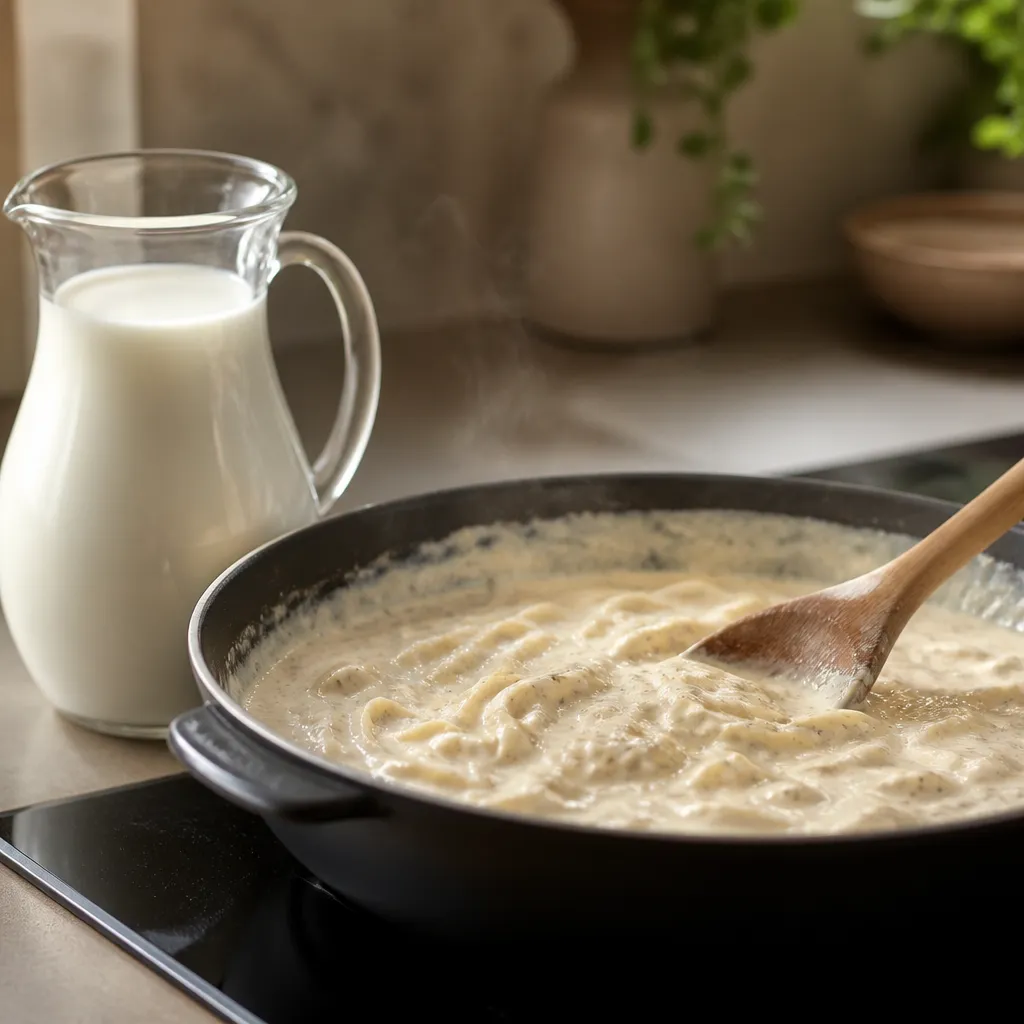
Best ratio: Use the same volume of whole milk as cream, but thicken it: whisk in 1 tsp cornflour (slaked in cold water) per 200ml, or build the sauce on a small butter-and-flour roux. Whole milk works far better than semi-skimmed or skimmed.
You can make a perfectly good creamy pasta sauce with milk instead of cream — it’s lighter and cheaper — but milk is thinner and less stable, so a couple of small adjustments make all the difference.
Thicken it, and use whole milk
Cream is rich enough to coat pasta on its own; milk isn’t, so it needs a little help. Either whisk in a teaspoon of cornflour slaked in cold water per 200ml, or start the sauce with a small roux (a knob of butter and a spoon of flour cooked together, then milk added gradually). Always reach for whole milk — the extra fat gives body and helps it resist splitting.
Keep the heat gentle
Milk splits far more easily than cream, especially if boiled hard or combined with acidic ingredients like lemon or wine. Keep it at a gentle simmer, and stir in cheese or any acid off the heat.
What to expect
The sauce will be lighter and less luxurious than a cream version — lovely for an everyday dinner, less suited to a rich, reduced restaurant-style sauce. A little grated Parmesan or a knob of butter at the end adds back some richness.
When it works
- Everyday creamy pasta sauces, carbonara-style dishes and lighter bakes.
- When you want to cut the richness or calories of a cream sauce.
When it doesn't work
- Sauces that need to reduce hard — milk can split or catch at high heat.
- Rich, restaurant-style sauces where cream's body and silkiness are the whole point.
Taste & texture difference
Milk makes a lighter, less rich and less silky sauce. Without thickening it can taste thin and watery, and it's more likely to split if boiled, so keep the heat gentle.