Yes, with care — you can freeze cheese.
You can freeze cheese, but it depends very much on the type. Hard cheeses like cheddar freeze well and are perfect for cooking, though they lose a little of their smooth texture and become more crumbly once thawed. Soft, high-moisture cheeses are a different story — they tend to split and go watery, so they’re best kept fresh.
The best way to do it
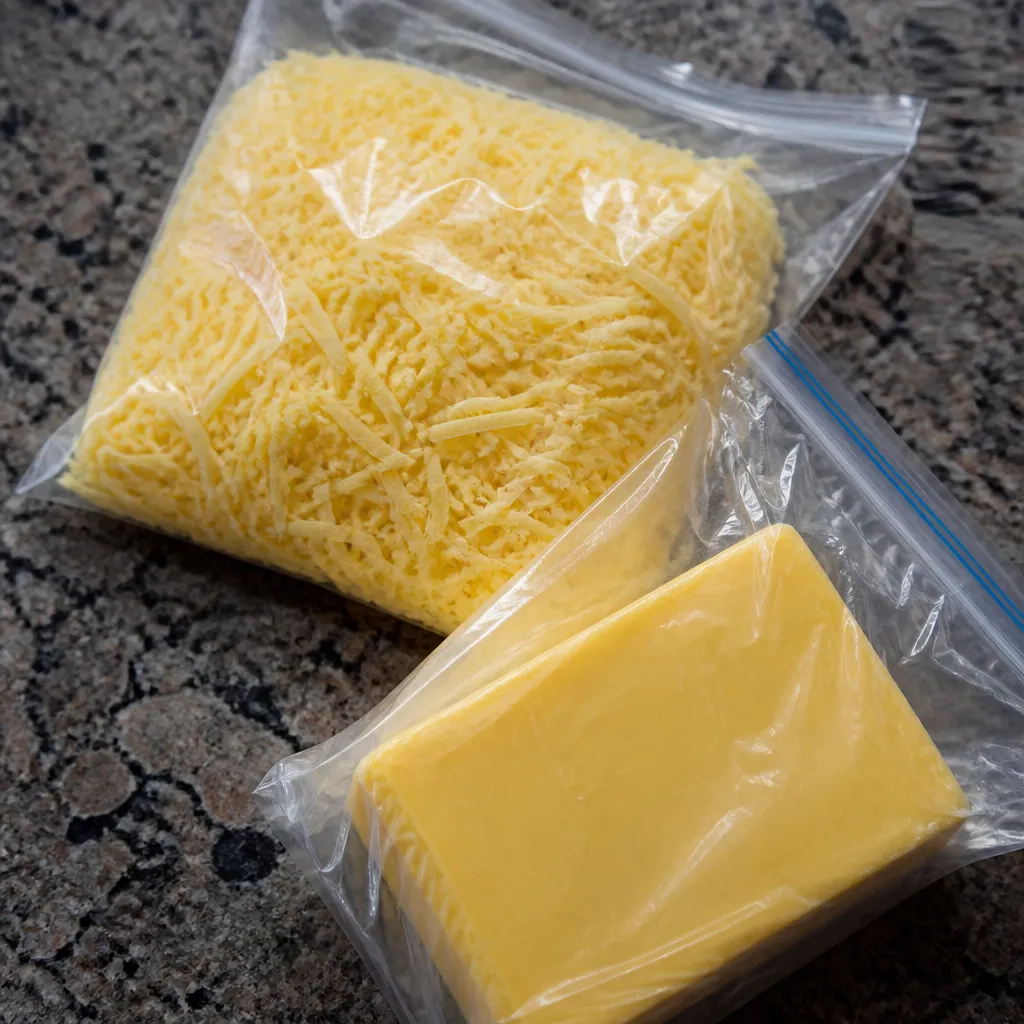
For hard cheese, grate it first: it takes up less space, freezes quickly, and you can throw it straight into a sauce, bake or toastie without thawing. Wrap it well to keep out air and freezer smells. It won’t be at its best on a cheeseboard afterwards, but for cooking it’s just as good.
How to freeze cheese
- Grate or slice hard cheese like cheddar before freezing, so you can use it straight from frozen.
- Wrap tightly or use a freezer bag, squeezing out the air, and label with the date.
- Grated cheese can be cooked from frozen; blocks are best thawed in the fridge.
How long it keeps
Up to 3 months for hard cheeses.
How to defrost
Thaw blocks slowly in the fridge; use grated cheese straight from frozen in cooking.
How to reheat
Use in cooking as normal — it melts fine even if the texture has changed.
When not to freeze it
- Soft cheeses (brie, cream cheese, ricotta, cottage cheese) split and go watery — avoid freezing them.
- Don't freeze cheese you want to eat fresh on a cheeseboard; it goes crumbly and dry.
Food safety: Keep cheese chilled after thawing and use within a few days. Freezing changes texture, not safety, but always thaw in the fridge rather than at room temperature.