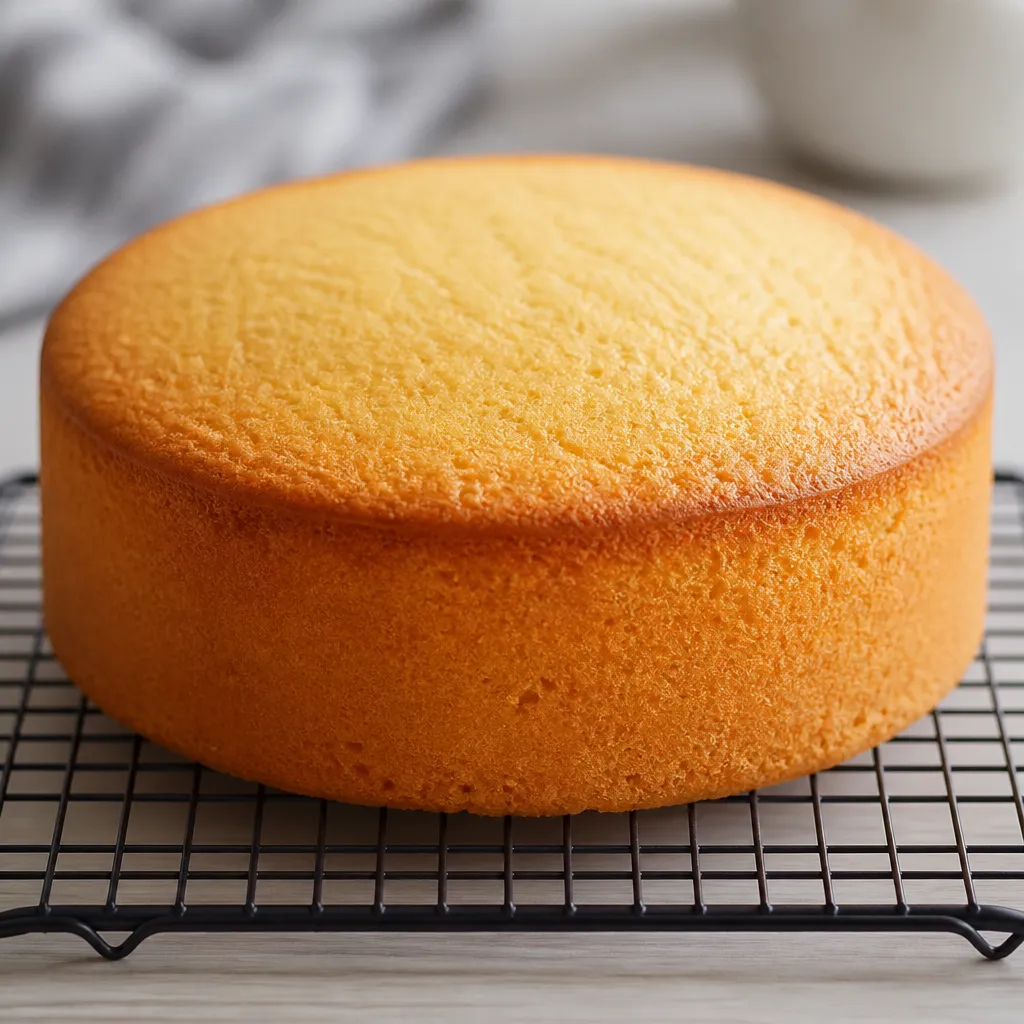
Quick fix: A cake sinks in the middle when it's underbaked, when the oven door is opened too early, or when there's too much raising agent. Bake until a skewer comes out clean, keep the door shut for the first three-quarters of baking, and measure your raising agent carefully.
A cake that rises beautifully then sinks into a dip in the middle is disheartening — but the reasons are well understood, and nearly always fixable for next time.
Why cakes sink
The most common cause is simply taking it out too soon. The edges set first, so a cake can look done while the centre is still wet; as it cools, the unset middle collapses. Close behind is opening the oven door too early — the rush of cold air deflates a cake that hasn’t set its structure yet. Too much raising agent causes a fast rise followed by a fall, and an over-hot oven sets the outside before the middle catches up.
Rescuing a sunken cake
It can’t be re-risen, but a dip is easy to disguise: cut it out and fill the hollow with whipped cream and fruit, level the top and ice it, or turn the lot into a trifle or a warm pudding with custard. It’ll still taste great.
Preventing it next time
Bake until a skewer comes out clean, keep the oven door shut for the first three-quarters, measure raising agents level, and check your oven’s real temperature — many run hotter or cooler than the dial.
Why it happens
- Underbaked — the centre hasn't set, so it collapses as it cools.
- The oven door was opened too early, letting cold air deflate the rising cake.
- Too much baking powder or bicarb — it rises too fast, then falls.
- Batter over-mixed, or the tin knocked, losing structure.
- Oven too hot: the outside sets and the middle keeps rising, then sinks.
How to fix it now
- You can't re-rise a sunk cake, but you can hide it: cut out the dip and fill with cream and fruit, or level it and cover with icing.
- Cube the whole thing for a trifle, or use it as the base for a warm pudding with custard.
How to prevent it next time
- Test for doneness with a skewer — it should come out clean before you take it out.
- Don't open the oven in the first three-quarters of the bake.
- Measure raising agents level and to the recipe.
- Use the right tin size and an accurate oven temperature (an oven thermometer helps).