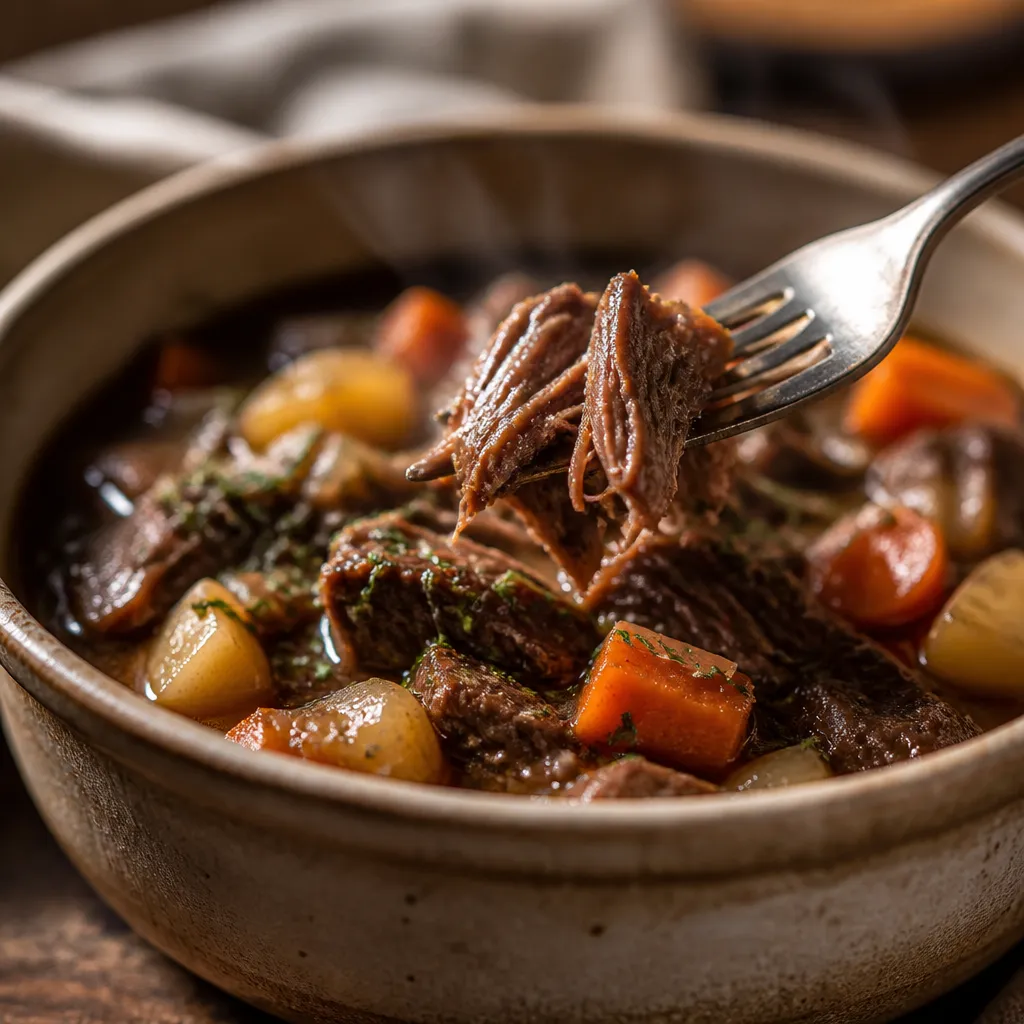
Quick fix: Tough stew meat almost always needs more time, not less. Cheaper braising cuts are full of connective tissue that only softens with long, gentle cooking — keep it at a low simmer for another hour or two and it will turn tender. Boiling it hard makes it tougher.
It feels counterintuitive, but tough meat in a stew usually means it’s undercooked, not overcooked. The cheap, flavourful cuts used for stewing — chuck, shin, braising steak — are full of tough connective tissue, and that only melts into soft, gelatinous tenderness with long, gentle cooking.
The fix is patience
If your stew meat is chewy, put it back on the lowest heat and let it simmer gently for another hour or two. There’s often a point where it suddenly gives up and turns tender. The two things to avoid are boiling it hard (which makes meat seize and toughen) and using the wrong cut — a lean steak will never go soft in a stew, no matter how long you cook it.
Why it happens
- It hasn't cooked long enough — the collagen in the meat hasn't broken down yet.
- The stew was boiled hard instead of gently simmered, which tightens the meat.
- The wrong cut was used — lean cuts like fillet stay tough in a stew.
How to fix it now
- Put it back on a low heat and keep it at a gentle simmer for another 1–2 hours; it will suddenly become tender.
- Make sure there's enough liquid to keep the meat covered as it cooks down.
How to prevent it next time
- Use proper braising cuts — chuck, shin or braising steak — not lean, quick-cook cuts.
- Cook low and slow at a bare simmer, never a rolling boil.
- Give it time: tough cuts often need 2–3 hours to become meltingly tender.