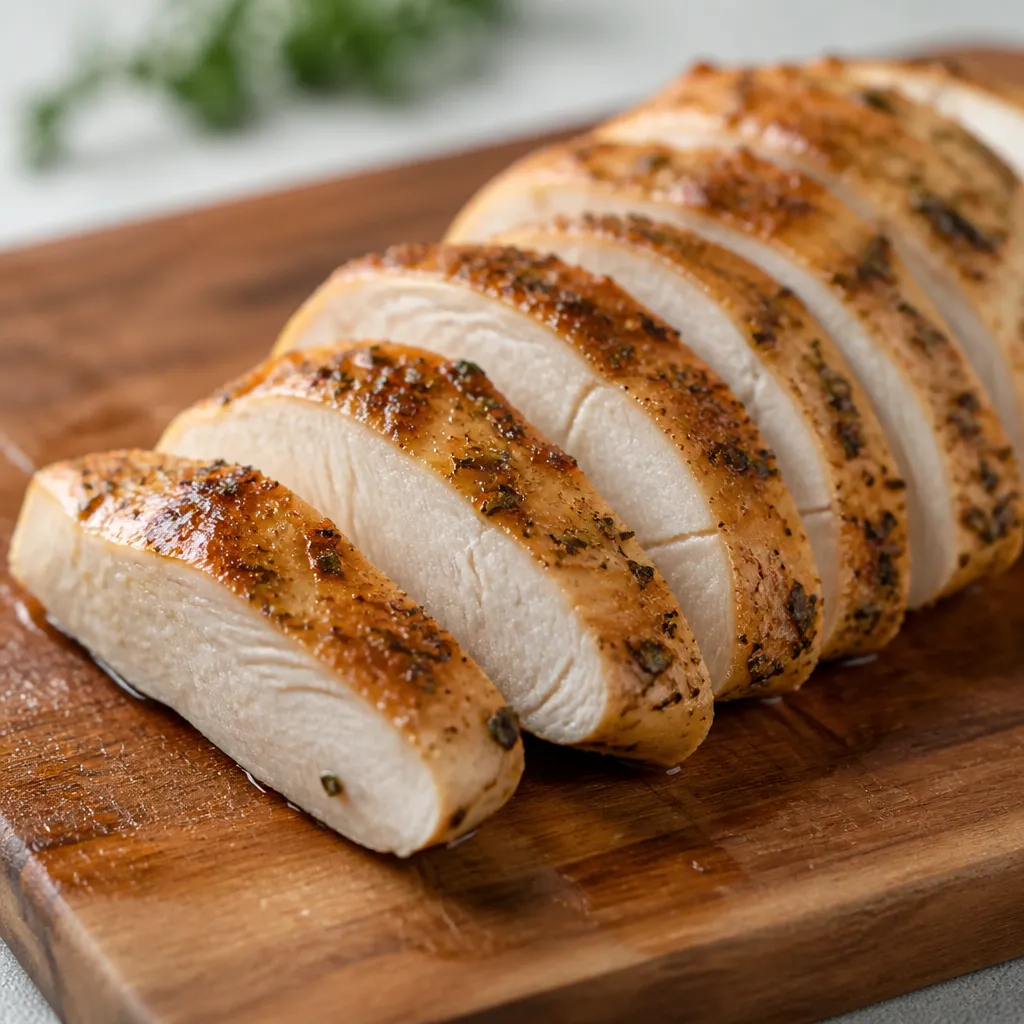
Quick fix: Rubbery chicken is almost always overcooked. Cook it just to 75°C and stop, use a gentle-to-moderate heat rather than a fierce one, don't overcrowd the pan, and rest it before slicing. Chicken breast especially turns rubbery when pushed past done.
Rubbery, chewy chicken is one of the most common cooking complaints, and it nearly always comes down to one thing: overcooking. Lean chicken breast in particular has a narrow window between just-done and tough, and every extra minute on the heat squeezes out moisture and firms up the meat.
Getting tender chicken
The fix is to treat it gently. Cook to 75°C in the centre and stop there, use a moderate heat rather than blasting it, and don’t cram the pan — crowded chicken steams and seizes. Flattening thick breasts helps them cook evenly, and a few minutes’ rest afterwards lets the fibres relax and the juices settle back in.
Why it happens
- Overcooking — the proteins tighten and squeeze out moisture, leaving it firm and rubbery.
- Cooking on too high a heat, so the outside toughens before the inside is done.
- Overcrowding the pan, which steams the chicken and makes it seize.
- Not resting it, so the fibres stay tense and the juices run out.
How to fix it now
- If it's slightly overdone, slice it thinly against the grain and toss it through a sauce, gravy or stir-fry to bring moisture back.
- Shred it and use it in a curry, soup or pasta where the sauce carries it.
How to prevent it next time
- Cook to 75°C in the centre and stop there — use a thermometer if you can.
- Flatten thick breasts so they cook evenly and quickly.
- Use a moderate heat and cook in batches so the pan isn't crowded.
- Rest cooked chicken for a few minutes before slicing.