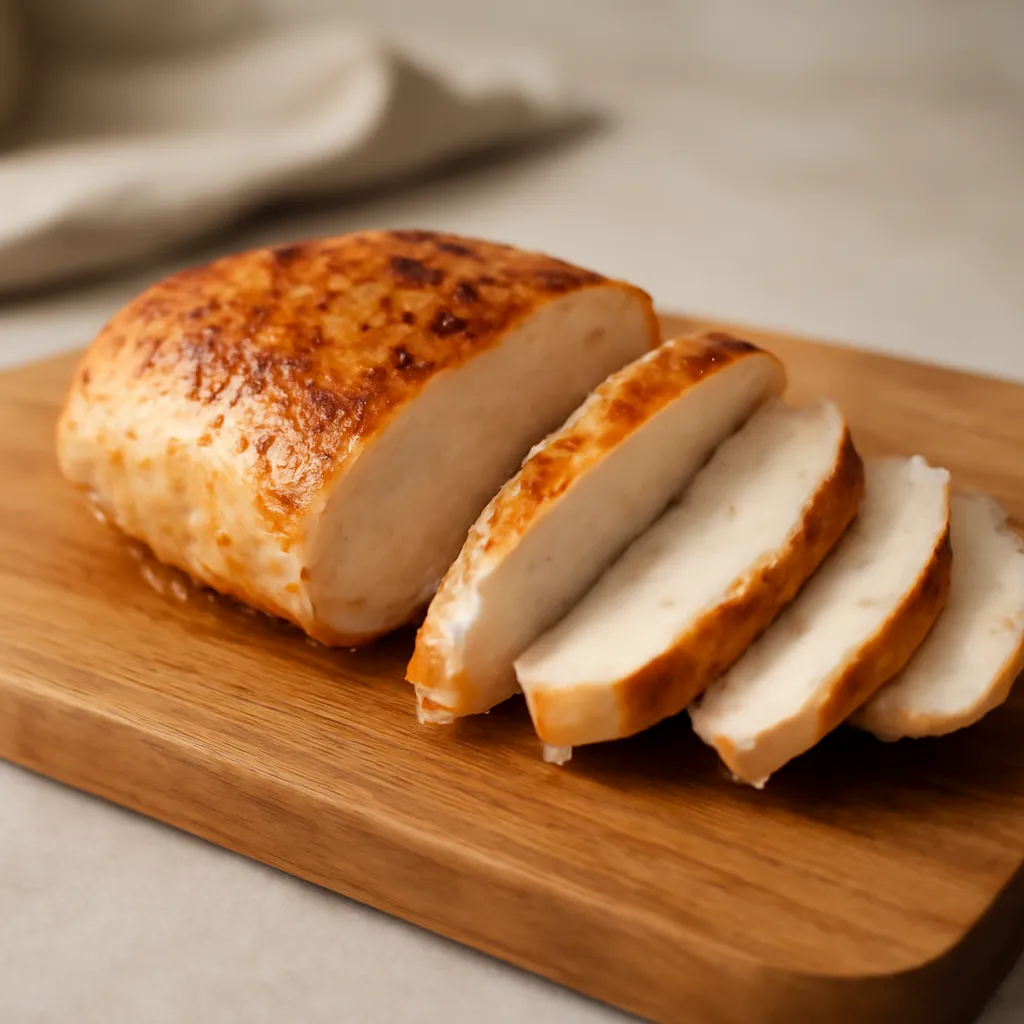
Quick answer: Chicken dries out when it's overcooked. Cook it to an internal temperature of 75°C and no higher, use a moderate heat rather than a fierce one, butterfly or flatten thick breasts so they cook evenly, and rest the meat for a few minutes before slicing so the juices stay in.
Dry chicken is almost always overcooked chicken. Chicken breast has very little fat, so the window between “just done” and “dry” is narrow — but it’s easy to hit every time once you know what actually keeps it juicy.
Don’t cook it past done
The single biggest cause of dry chicken is leaving it on the heat too long. Chicken is cooked the moment it reaches 75°C in the thickest part; every extra minute after that squeezes out moisture. A cheap instant-read thermometer is the best few pounds you can spend if you cook chicken often — pull it at 75°C and stop.
Even thickness cooks evenly
A chicken breast is fat at one end and thin at the other, so by the time the thick part is safe the thin part is overdone. Fix this by:
- Butterflying — slice the breast almost in half horizontally and open it out.
- Flattening — pop it between two sheets of baking paper and bash gently with a rolling pin to an even thickness.
Both mean the whole piece finishes at once, and they cut the cooking time too.
Moderate heat, not fierce
A screaming-hot pan browns the outside long before the middle is done. Sear to get colour, then lower the heat to medium and finish gently, or start in a pan and finish in a moderate oven. Thighs are far more forgiving than breast — they stay juicy even if slightly overcooked — so use them if you tend to run long.
Add a little insurance
- Brining: soak the breast in a solution of 1 tbsp salt per 500ml water for 20–30 minutes, then pat dry. It seasons the meat and helps it hold moisture.
- A knob of butter or oil in the pan bastes the surface as it cooks.
Always rest it
Let cooked chicken sit for 3–5 minutes before slicing. Resting lets the juices redistribute instead of running straight out onto the board. Slicing against the grain also makes each piece feel more tender.
Get those five things right — 75°C, even thickness, gentle heat, a little salt or fat, and a rest — and dry chicken becomes a thing of the past.
Food safety: Chicken is safely cooked when it reaches 75°C in the thickest part, the juices run clear and there is no pink meat. If you don't have a thermometer, cut into the thickest part to check it's white throughout with clear (not pink) juices.