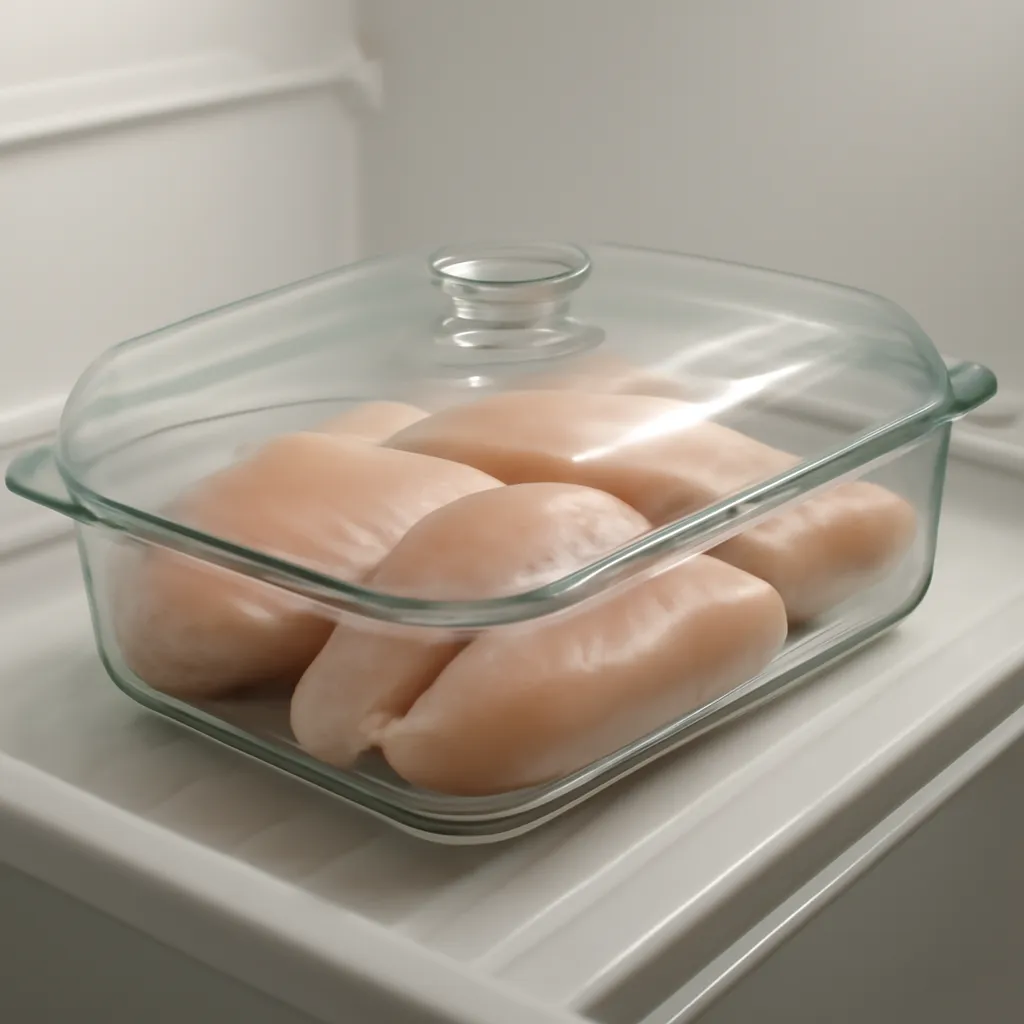
Quick answer: The safest way is in the fridge: put the chicken in a covered container on the bottom shelf and allow around 24 hours per 1–2 kg. For a faster thaw, seal it in a leakproof bag and submerge in cold water, changing the water every 30 minutes. Never defrost chicken at room temperature.
Defrosting chicken is one of those jobs where the safe way and the risky way look almost the same — but the difference matters. Raw chicken left to thaw on the worktop can grow harmful bacteria on its surface long before the middle has defrosted. Here’s how to do it properly.
The fridge method (safest, plan ahead)
This is the method to use whenever you can:
- Take the chicken out of the freezer and put it in a covered container or on a plate with a lip to catch any drips.
- Place it on the bottom shelf of the fridge, below ready-to-eat foods.
- Leave it to thaw slowly — allow roughly 24 hours per 1–2 kg. Individual breasts or thighs may take just a few hours to overnight; a whole bird can take a day or more.
It’s done when there are no ice crystals left and the meat is soft and floppy throughout.
The cold-water method (faster)
When you’ve forgotten to plan ahead:
- Seal the chicken in a leakproof bag so no water gets in.
- Submerge it in a bowl or sink of cold water (never warm or hot — that pushes the surface into the danger zone).
- Change the water every 30 minutes to keep it cold. Small pieces thaw in an hour or so.
Cook it straight away once thawed by this method.
Never do this
- Don’t defrost on the worktop or in warm water. The outside warms into the bacteria danger zone (5–63°C) while the centre is still frozen.
- Don’t refreeze raw chicken once it’s thawed. You can refreeze it only after it’s been cooked.
After defrosting
- Cook within a day of the chicken fully thawing, and keep it in the fridge until you do.
- Cook it thoroughly — until it reaches 75°C, the juices run clear and there’s no pink meat.
- Clean up: wash your hands, chopping board and any utensils that touched the raw chicken, and don’t rinse raw chicken under the tap (it just splashes bacteria around).
In a real hurry, you can also cook chicken straight from frozen — it takes about 50% longer and you must still check it reaches 75°C throughout.
Food safety: Always defrost chicken in the fridge or in cold water — never on the worktop, where the outside warms into the danger zone (5–63°C) while the middle is still frozen. Keep defrosting chicken covered and on the bottom shelf so drips can't touch other food. Wash hands, boards and utensils after handling raw chicken. Cook defrosted chicken within a day, and cook it thoroughly until it reaches 75°C with clear juices and no pink meat. Don't refreeze raw thawed chicken — you can only refreeze it once it has been cooked.