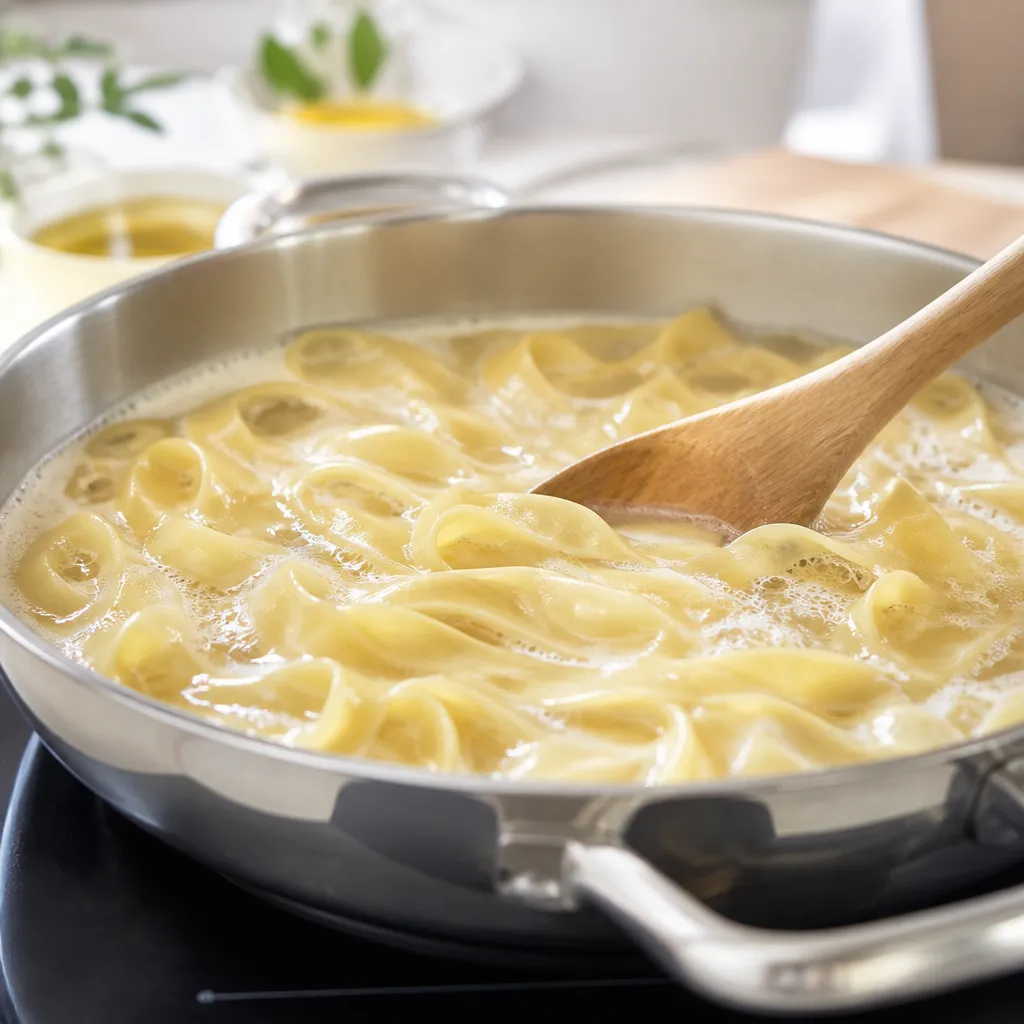
Quick answer: Use plenty of well-salted boiling water, stir in the first minute, and don't overcook. Toss drained pasta straight into the sauce or with a little reserved cooking water. You don't need oil in the water.
Pasta sticks for two reasons: too little water, and starch. As pasta cooks it releases starch, and if the strands sit close together in a small amount of water — or get left to sit after draining — that starch glues them together. Fix the water and the timing and the problem mostly disappears.
Use enough water, and salt it
Use a large pan and roughly 1 litre of water per 100g of pasta. Bring it to a rolling boil and add a generous amount of salt — about a tablespoon for a big pan, so it tastes like mild seawater. Plenty of water keeps the starch dilute and the temperature high, so the pasta starts cooking the moment it goes in instead of sitting in lukewarm water and turning gluey.
A common mistake is using a small pan to save time. It actually works against you: the water takes ages to come back to the boil after the pasta goes in, and the crowded strands stick before they’ve even started cooking properly.
Stir in the first minute
The danger zone is the first 60–90 seconds, when the outsides are softening and tacky. Stir straight after adding the pasta, then once or twice more during cooking. That stops strands welding together at the start. Shapes like penne and fusilli are more forgiving; long spaghetti and linguine need the most attention early on.
Don’t overcook
Cook to al dente — just firm to the bite, following the lower end of the packet time. Overcooked pasta is softer, releases more starch and clumps far more easily. Start tasting a minute or two before the packet says it’s ready, and remember it carries on cooking slightly once tossed with a hot sauce.
Skip the oil — use the sauce instead
Oil in the cooking water mostly floats on top and does little. Worse, oiling drained pasta makes the surface slippery so sauce slides off. Instead:
- Drain the pasta but don’t rinse it (rinsing washes off the starch that helps sauce cling).
- Toss it straight into the warm sauce, off the heat or over a low heat.
- Loosen with a splash of reserved cooking water — the starch in it helps the sauce coat every strand and brings everything together.
Should you ever rinse pasta?
For a hot dish, no — rinsing cools the pasta and strips the starch that helps sauce stick. The one exception is a cold pasta salad: rinse it under cold water to stop the cooking and keep it loose, then toss with a little oil or dressing.
Fresh vs dried pasta
Fresh pasta cooks in just 2–3 minutes and is more delicate, so stir gently and don’t walk away. Dried pasta is sturdier and gives you a bit more leeway. Either way the same rules apply: big pan, well salted, stir early.
Quick checklist
- Big pan, plenty of water, well salted.
- Stir in the first minute, then occasionally.
- Cook to al dente — taste before draining.
- Save a mug of pasta water; don’t rinse.
- Toss with the sauce straight away.