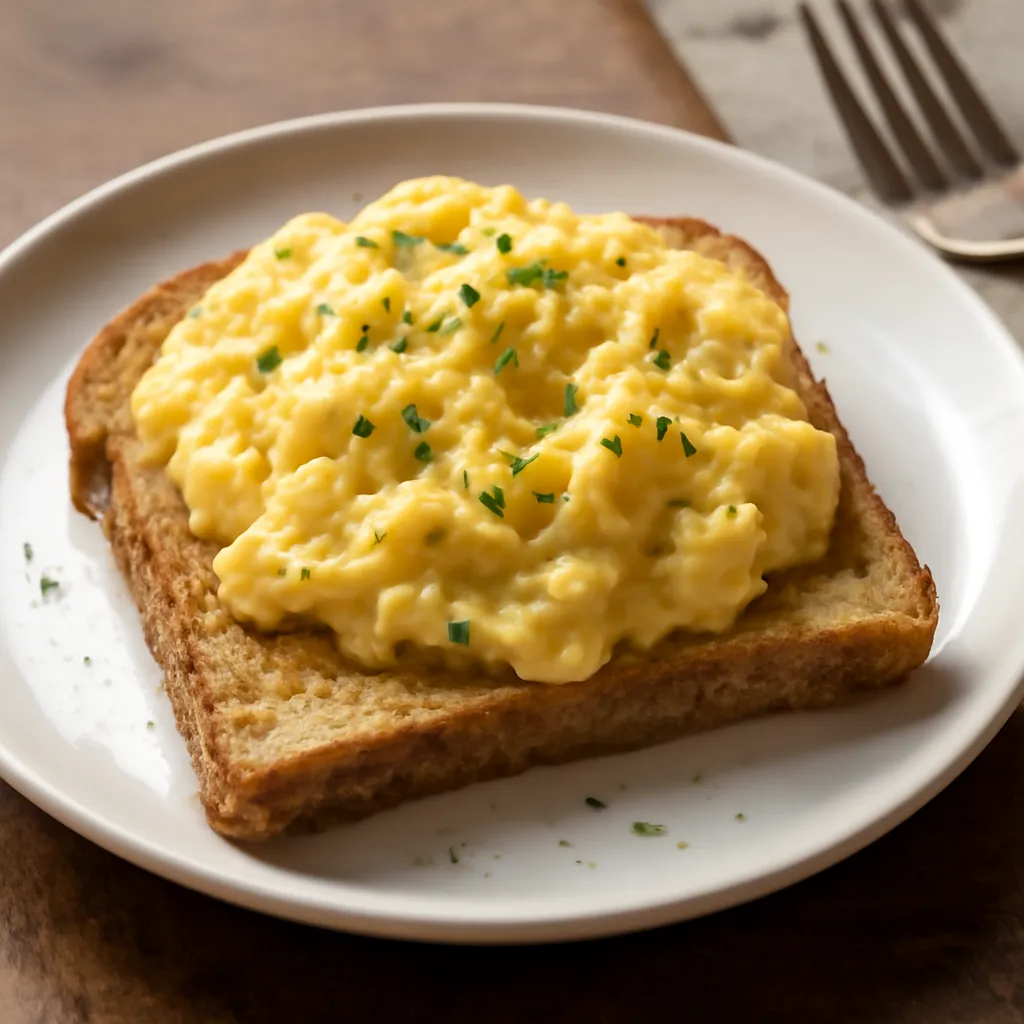
Impossibly soft, glossy scrambled eggs cooked low and slow with a knob of butter and a splash of milk. Ready in five minutes and pulled off the heat while still just underdone, so they set into perfect creamy curds on the plate.
The secret to properly creamy scrambled eggs isn’t cream at all, it’s patience and low heat. Cook them fast and hot and you get dry, squeaky curds; cook them gently and pull the pan early and they stay glossy and soft. This is the reliable everyday method, on the plate in five minutes flat.
Ingredients
Method
- Crack the eggs into a bowl, add the milk and a pinch of salt, then beat well with a fork until the yolks and whites are fully combined and slightly frothy.
- Melt the butter in a non-stick pan over a low heat, swirling to coat the base, until it foams but does not brown.
- Pour in the eggs and leave them for a few seconds to start setting, then begin stirring gently and continuously with a spatula, dragging the setting egg from the edges into the middle.
- Keep the heat low and keep the eggs moving so they cook into soft, glossy curds rather than one solid sheet, scraping the base as you go.
- When the eggs are mostly set but still look slightly wet and creamy, take the pan off the heat, the residual warmth will finish cooking them to just done with no runny liquid remaining.
- Stir through the pepper and most of the chives, then spoon straight onto warm plates and scatter over the rest of the chives to serve.
Serve it with
- Hot buttered toast or sourdough
- Grilled back bacon
- Smoked salmon and a squeeze of lemon
- Roasted cherry tomatoes on the vine
- Wilted spinach
Why this works
Pulling the pan off the heat while the eggs still look underdone lets carryover cooking finish the job gently, so they set soft and creamy instead of overcooking into rubbery curds.
Common swaps
- Swap milk for single cream or a spoonful of creme fraiche for a richer finish.
- Use a plant-based spread and oat milk to keep it dairy-free.
- Fold in a handful of grated mature Cheddar just before the eggs finish for cheesy scramble.
- Stir through snipped dill or flat-leaf parsley instead of chives.
Common mistakes to avoid
- Cooking over high heat, which sets the eggs too fast and turns them dry and rubbery.
- Leaving the pan on the hob until the eggs look fully done, they carry on cooking off the heat.
- Under-beating the eggs, so you get streaky patches of white instead of an even, creamy scramble.
- Salting too early and heavily, which can draw out water and make the eggs watery.
Storage, freezing & reheating
Storage: Scrambled eggs are best eaten straight away, but leftovers can be cooled quickly and kept covered in the fridge for up to 1 day.
Reheating: Reheat gently in a pan or microwave in short bursts until piping hot throughout, though the texture will firm up and lose some of its creaminess.
Allergen notes: contains Egg, Milk. Always check individual product labels.
Estimated nutrition
Per serving, estimated from typical ingredient values — not a substitute for precise dietary calculation.
| Calories | 270 kcal |
|---|---|
| Protein | 18 g |
| Carbohydrate | 2 g |
| Fat | 21 g |