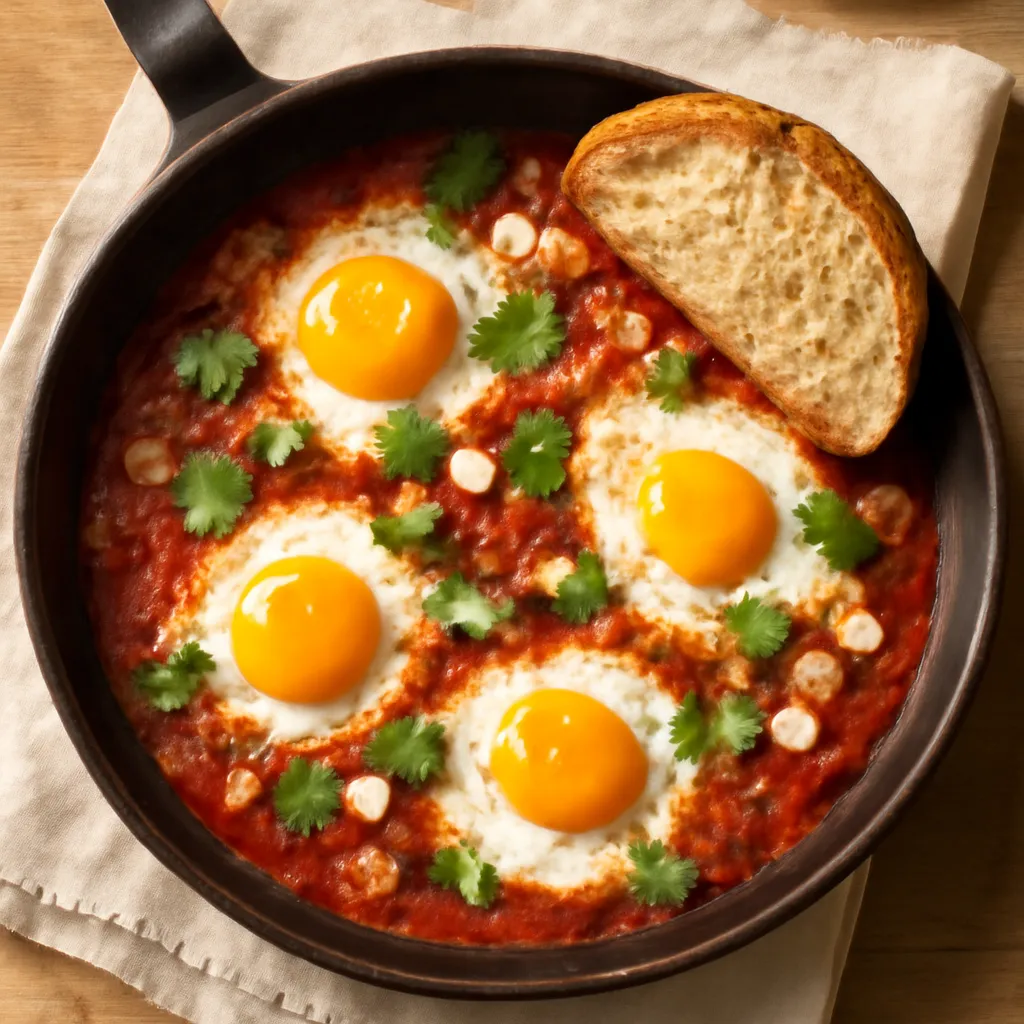
Shakshuka is a one-pan Middle Eastern classic: eggs gently poached in a smoky, garlicky tomato and pepper sauce. It's cheap, forgiving and endlessly satisfying, whether for a lazy weekend brunch or a quick meat-free supper. Serve it straight from the pan with plenty of bread for dunking.
This is proper comfort food from one pan. You build a deeply savoury sauce from onion, pepper and tinned tomatoes, spiced with cumin, paprika and a little chilli, then crack eggs straight in to poach until the whites set around gloriously runny yolks. It’s forgiving, cheap and ideal for a slow weekend brunch or a fast meat-free supper.
Ingredients
Method
- Heat the olive oil in a wide, deep frying pan over a medium heat. Add the onion and red pepper and cook gently for 8-10 minutes, stirring now and then, until softened and starting to colour.
- Stir in the garlic, cumin, smoked paprika and chilli flakes and cook for 1 minute until fragrant, then add the tomato purée and cook for another minute to take off its raw edge.
- Tip in the chopped tomatoes and sugar, season well with salt and pepper, and refill the empty tin about a third with water, swirling it in. Simmer for 8-10 minutes, stirring occasionally, until the sauce is thick enough to hold a trench when you drag a spoon through it.
- Taste and adjust the seasoning — it should be punchy. Using the back of a spoon, make four shallow wells in the sauce, spacing them out.
- Crack an egg into each well. Cover the pan with a lid or a sheet of foil and reduce the heat to low.
- Cook for 6-8 minutes for runny yolks, or a couple of minutes longer for firmer eggs. The eggs are ready when the whites are fully set and opaque with no translucent, jelly-like patches remaining, and the sauce is piping hot throughout.
- Scatter over the chopped coriander or parsley and bring the pan to the table. Serve at once, straight from the pan, with warm bread for scooping.
Serve it with
- Warm crusty bread or toasted pitta for dunking
- A spoonful of thick Greek yoghurt
- Crumbled feta scattered over the top
- A handful of dressed rocket or a simple green salad
- A drizzle of extra virgin olive oil
Why this works
Blooming the spices in oil and cooking out the tomato purée builds a deep, savoury base, while poaching the eggs directly in the simmering sauce keeps the whites tender and lets the yolks stay soft.
Common swaps
- Swap the red pepper for a jarred roasted pepper to save time and add smokiness
- Use a 400 g tin of cherry tomatoes for a sweeter, chunkier sauce
- Stir in a handful of baby spinach with the tomatoes for extra greens
- No fresh chilli or flakes? A dash of harissa paste brings warmth and depth
- Crumble in feta or spoon over dollops of soft goat's cheese before adding the eggs
Common mistakes to avoid
- Rushing the sauce — a watery base means the eggs sink and overcook, so reduce it until thick first
- Cooking the eggs too fast on high heat, which sets the yolks hard before the whites cook evenly; keep it gentle and covered
- Forgetting the lid — it traps steam that cooks the tops of the eggs so the whites set through
- Under-seasoning the sauce; taste and add salt before the eggs go in, as it's harder to fix afterwards
Storage, freezing & reheating
Storage: Shakshuka is best eaten fresh, but leftovers keep in an airtight container in the fridge for up to 2 days. The yolks will firm up on storing.
Reheating: Reheat gently in a covered pan over a low heat until piping hot throughout. The sauce can also be made ahead and refrigerated, then reheated before poaching fresh eggs.
Allergen notes: contains Egg. Always check individual product labels.
Estimated nutrition
Per serving, estimated from typical ingredient values — not a substitute for precise dietary calculation.
| Calories | 340 kcal |
|---|---|
| Protein | 18 g |
| Carbohydrate | 18 g |
| Fat | 22 g |