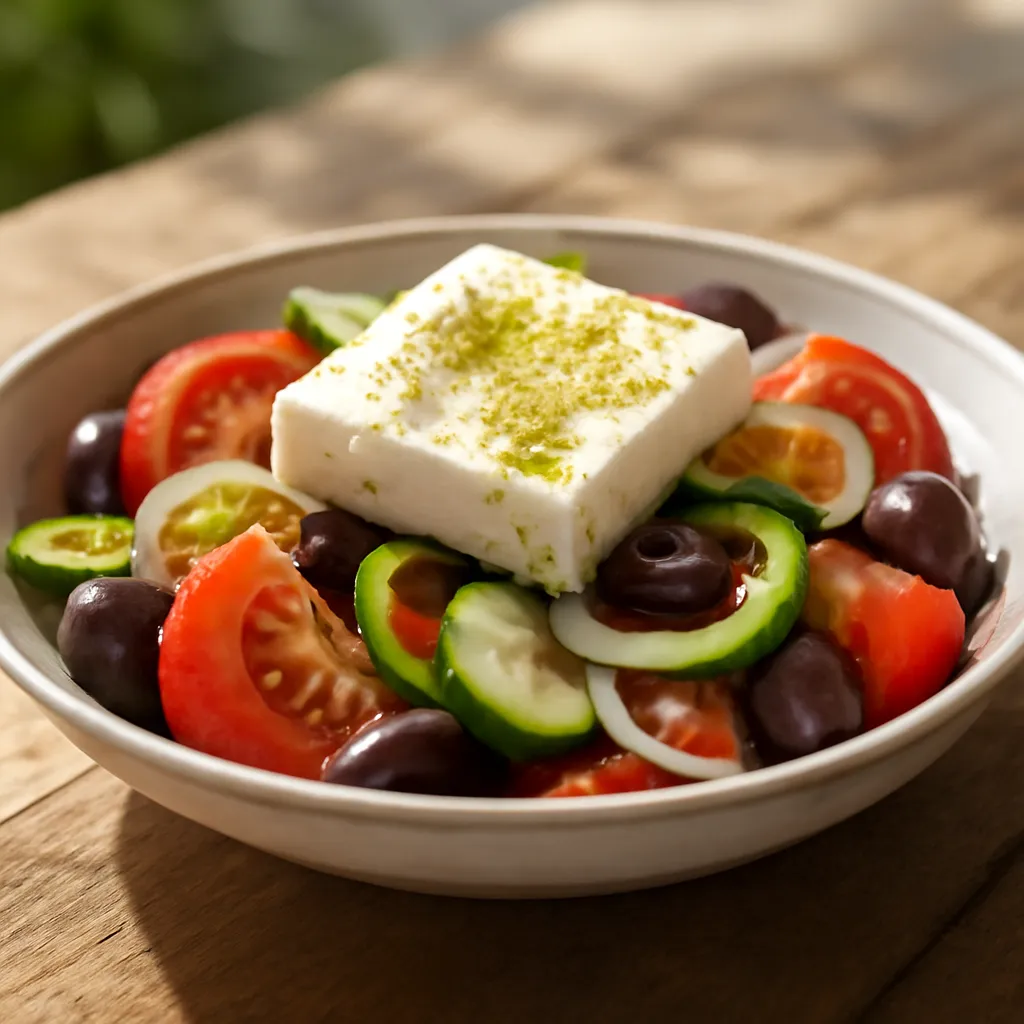
This is horiatiki, the honest Greek village salad you find on every taverna table. No lettuce, no fuss, just ripe vegetables, briny olives and a proud slab of feta dressed simply with good olive oil and dried oregano. It comes together in fifteen minutes and lives or dies on the quality of your ingredients.
A real Greek salad has no leaves and no vinaigrette in a jar. It is ripe summer vegetables cut into generous chunks, crowned with a whole slab of feta and showered with dried oregano, then dressed at the table with fruity olive oil. Get good tomatoes and proper Greek feta, and the rest looks after itself.
Ingredients
Method
- Cut the tomatoes into thick wedges or rough chunks, depending on their size, and drop them into a wide, shallow serving bowl. Season with a pinch of sea salt to draw out their juices, which become part of the dressing.
- Peel the cucumber in stripes if the skin is tough, then halve it lengthways and slice into thick half-moons. Add to the bowl with the tomatoes.
- Scatter over the thinly sliced red onion and the rings of green pepper, spreading them across the top.
- Add the Kalamata olives, keeping the stones in for flavour, and give the bowl a gentle toss to mingle the vegetables without crushing the tomatoes.
- Lay the whole block of feta on top of the salad, keeping it in one piece. This is the traditional way, so everyone breaks off a share at the table.
- Drizzle the olive oil generously over everything, including the feta, then add the red wine vinegar if using.
- Crumble the dried oregano between your fingers and sprinkle it over the feta and vegetables so its scent releases.
- Serve straight away at room temperature, with plenty of crusty bread to mop up the oil and tomato juices in the bowl.
Serve it with
- Warm crusty bread or pita
- Grilled lamb chops or souvlaki
- Chargrilled aubergine
- A cold glass of retsina or crisp white wine
- Tzatziki and warm flatbreads
Why this works
Salting the tomatoes releases their juice, which blends with the olive oil to make a natural dressing in the bottom of the bowl. Leaving the feta whole keeps it creamy rather than letting it dissolve into the vegetables.
Common swaps
- Swap Kalamata olives for any good black olive in brine
- Use a milder salad cheese if you find feta too sharp
- Yellow or orange pepper works in place of green
- Add a few capers for extra brine if you like
Common mistakes to avoid
- Using pale, underripe tomatoes; the salad depends on them being ripe and full of flavour
- Crumbling the feta into small pieces so it turns to paste instead of staying in a proud slab
- Adding lettuce, which turns it into something that is not horiatiki
- Dressing it too far ahead, so the vegetables go soggy; dress just before serving
Storage, freezing & reheating
Storage: Best eaten fresh on the day it is made. Any leftovers keep in the fridge for up to a day, though the vegetables will soften.
Allergen notes: contains Milk. Always check individual product labels.
Estimated nutrition
Per serving, estimated from typical ingredient values — not a substitute for precise dietary calculation.
| Calories | 290 kcal |
|---|---|
| Protein | 8 g |
| Carbohydrate | 10 g |
| Fat | 24 g |