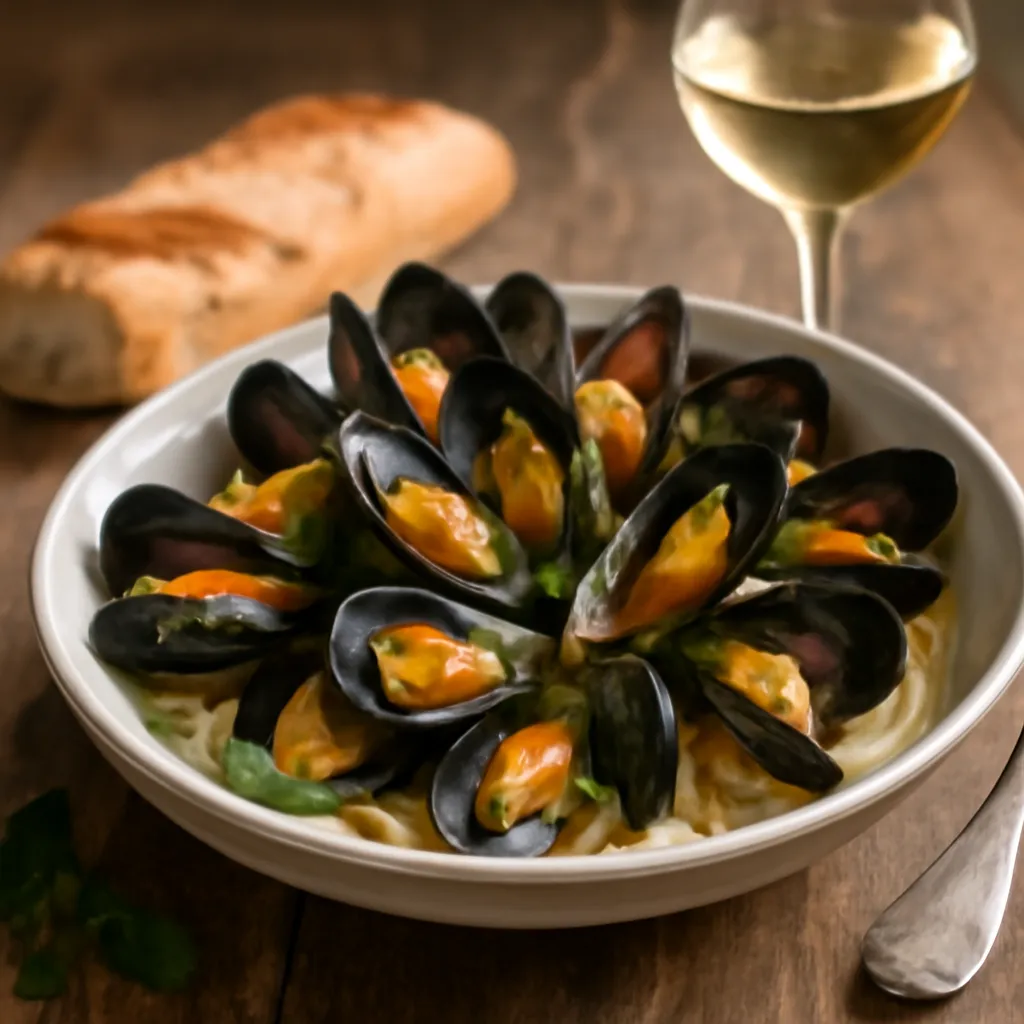
This is the French bistro classic done properly at home: fresh mussels opened in seconds over a fragrant broth of white wine, shallots, garlic and butter. Finished with a shower of parsley and a splash of cream, it's fast, generous and made for tearing bread through the pan.
Moules marinière is the dish that made mussels famous, and it deserves its reputation. A handful of good aromatics, a glass of dry white wine and a knob of butter turn a bag of cheap shellfish into something that feels like a treat. The whole thing cooks in the time it takes to slice a baguette, so timing is everything.
Ingredients
Method
- Tip the mussels into a sink of cold water. Scrub each shell and pull away any stringy beards, tugging them towards the hinge. Discard any that are cracked, or any open ones that refuse to close when tapped firmly against the worktop.
- Melt the butter with the olive oil in a large, deep pan or stockpot over a medium heat. Add the shallots and cook gently for 4-5 minutes until soft and translucent but not coloured.
- Stir in the garlic and bay leaf and cook for another minute, until the garlic smells fragrant but hasn't browned.
- Turn the heat up high and pour in the wine. Let it bubble hard for a minute to cook off the raw alcohol and reduce slightly.
- Tip in the mussels all at once, then clamp on a tight lid. Steam for 3-4 minutes, giving the pan a good shake halfway through to move the mussels around.
- Lift the lid: the mussels are cooked when the shells have opened wide and the flesh is plump and no longer translucent. Discard any that stay firmly shut.
- Stir the cream, if using, through the broth and scatter in most of the parsley. Season with black pepper (the mussels bring plenty of salt).
- Ladle the mussels and all their broth into warm bowls, shower with the remaining parsley and serve at once with bread for mopping.
Serve it with
- Crusty baguette or sourdough
- Skinny French fries for moules-frites
- A crisp green salad
- A glass of the same dry white wine
- Garlic aioli for dipping
Why this works
Sweating the shallots and garlic first builds a savoury base, while a fierce blast of wine creates the steam that opens the mussels in minutes and leaves you with a broth carrying all their briny juices.
Common swaps
- Swap the wine for dry cider for a Norman twist
- Use a splash of Pernod or Ricard with the wine for an aniseed lift
- Replace cream with a spoon of crème fraîche
- No shallots? Use half a finely chopped onion
- Clams work in place of mussels with the same timings
Common mistakes to avoid
- Cooking mussels that were already dead: bin any that won't close before cooking, and any that stay shut after
- Overcrowding a small pan so the mussels steam unevenly; use your biggest lidded pot
- Boiling them too long, which turns the flesh rubbery; pull them off the heat the moment they open
- Adding salt without tasting; mussels are naturally salty and rarely need more
Storage, freezing & reheating
Storage: Best eaten straight away. Pick any leftover meat from the shells, cover in the strained broth and keep chilled for up to a day.
Reheating: Reheat picked mussels gently in their broth until piping hot; do not let it boil or they will toughen.
Allergen notes: contains Molluscs, Milk, Sulphites. Always check individual product labels.
Estimated nutrition
Per serving, estimated from typical ingredient values — not a substitute for precise dietary calculation.
| Calories | 410 kcal |
|---|---|
| Protein | 34 g |
| Carbohydrate | 12 g |
| Fat | 22 g |