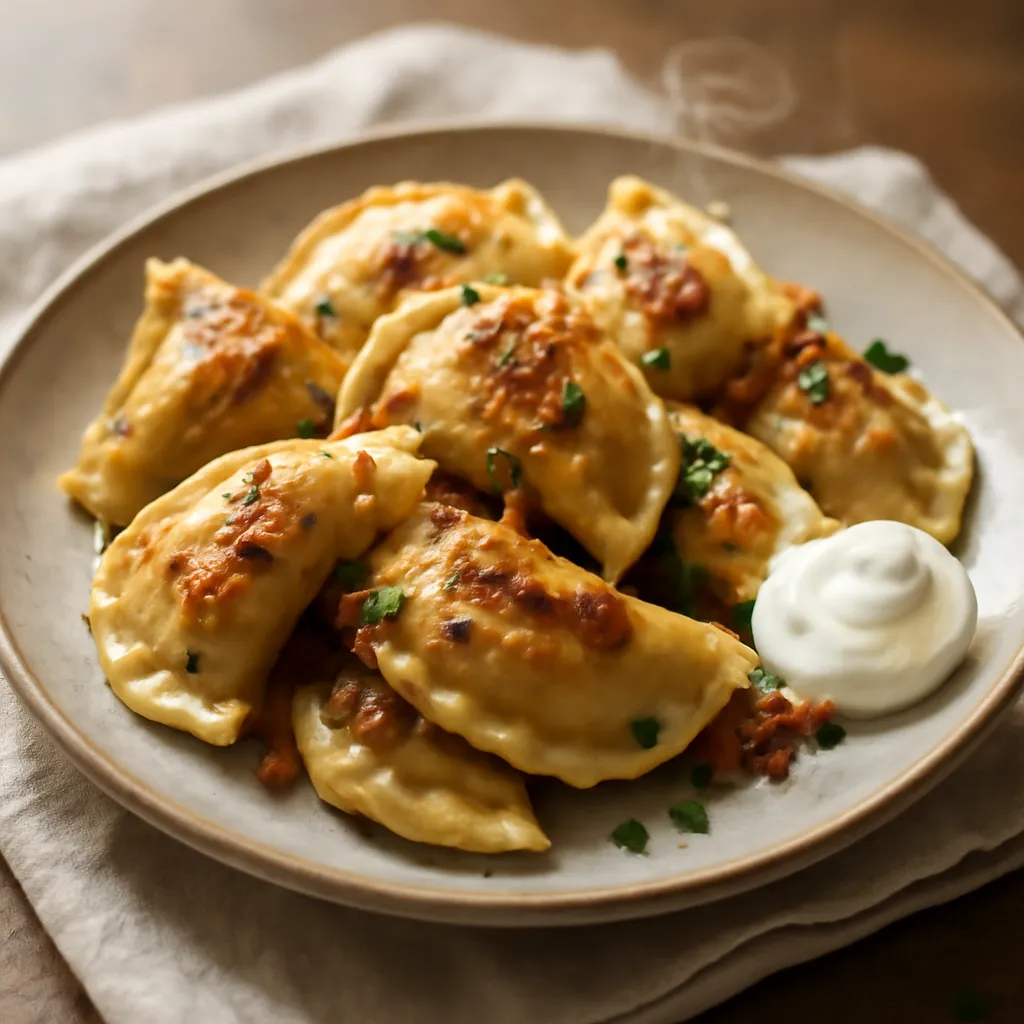
These are pierogi ruskie, the classic Polish potato-and-cheese dumplings. A soft, forgiving sour-cream dough wraps a savoury mash of floury potato and fresh curd cheese, boiled until they float then crisped in butter with onions.
Pierogi ruskie are the pierogi every Polish grandmother makes: pillowy dumplings filled with soft potato, tangy curd cheese and golden onion. The dough is far kinder than it looks, and a boil-then-fry finish gives you crisp, buttery edges around a comforting centre. Make a big batch and freeze half for a genuinely brilliant midweek dinner.
Ingredients
Method
- Make the dough first so it can rest. Tip the flour and salt into a bowl, add the egg, soured cream and oil, then mix to a shaggy dough. Turn out and knead for 5 minutes until smooth and elastic, adding a splash of warm water if it feels dry. Wrap and rest at room temperature for 30 minutes.
- Meanwhile, boil the diced potatoes in salted water until very tender, 12-15 minutes. Drain well and mash smooth, then leave to cool slightly.
- Melt half the butter in a pan and fry two chopped onions gently until soft and deeply golden, about 10 minutes. Stir most of them into the mash, keeping a spoonful back. Beat in the twaróg, white pepper and plenty of salt, then taste; the filling should be well seasoned. Cool completely.
- Roll the dough out thinly on a floured surface to about 2mm. Stamp out 8-9cm rounds with a cutter or glass, re-rolling the offcuts.
- Place a teaspoon of filling on each round. Fold into a half-moon and pinch the edges firmly to seal, working from the centre out and pressing out any air. Crimp with your fingers or a fork; a dry, well-sealed edge stops them bursting.
- Bring a wide pan of salted water to a gentle boil. Drop in the pierogi in batches, stir once so they don't stick, and cook for 2-3 minutes after they float to the surface. Lift out with a slotted spoon.
- Melt fresh butter in a large frying pan and fry the boiled pierogi in a single layer until golden and crisp on both sides, 2-3 minutes. Fry the reserved onion alongside until browned.
- Serve hot, scattered with the fried onions, a spoon of soured cream and a little chopped chives.
Serve it with
- Soured cream
- Crispy fried onions
- A crunchy cucumber and dill salad
- Buttered sauerkraut
- Chopped chives or dill
Why this works
Floury potatoes and fresh curd cheese give a light, fluffy filling rather than a heavy one, while soured cream in the dough makes it supple and easy to seal. Boiling then pan-frying delivers both a tender dumpling and crisp, buttery edges.
Common swaps
- No twaróg: use quark, or well-drained ricotta, or even mashed cottage cheese pressed through a sieve
- Swap soured cream in the dough for the same weight of plain full-fat yoghurt
- Add 100g grated mature cheddar for a sharper, saltier filling
- Stir a pinch of grated nutmeg or fried garlic into the potato for extra depth
Common mistakes to avoid
- Rolling the dough too thick, which gives stodgy, doughy dumplings; aim for about 2mm
- Under-seasoning the filling; potato and curd cheese need a confident amount of salt and pepper
- Trapping air or leaving damp edges, so they split open in the water; press out air and keep the sealing edge flour-free
- Boiling too hard, which tears the dumplings; keep the water at a gentle simmer
Storage, freezing & reheating
Storage: Keep cooked pierogi in the fridge for up to 3 days in a covered container. Uncooked pierogi are best frozen rather than chilled raw.
Freezing: Freeze uncooked pierogi in a single layer on a floured tray until solid, then bag them for up to 3 months. Cook from frozen, adding a minute or two to the boiling time.
Reheating: Reheat cooked pierogi in a knob of butter in a hot frying pan until crisp and heated through, or microwave briefly then finish in the pan.
Allergen notes: contains Gluten, Milk, Egg. Always check individual product labels.
Estimated nutrition
Per serving, estimated from typical ingredient values — not a substitute for precise dietary calculation.
| Calories | 520 kcal |
|---|---|
| Protein | 17g |
| Carbohydrate | 62g |
| Fat | 22g |