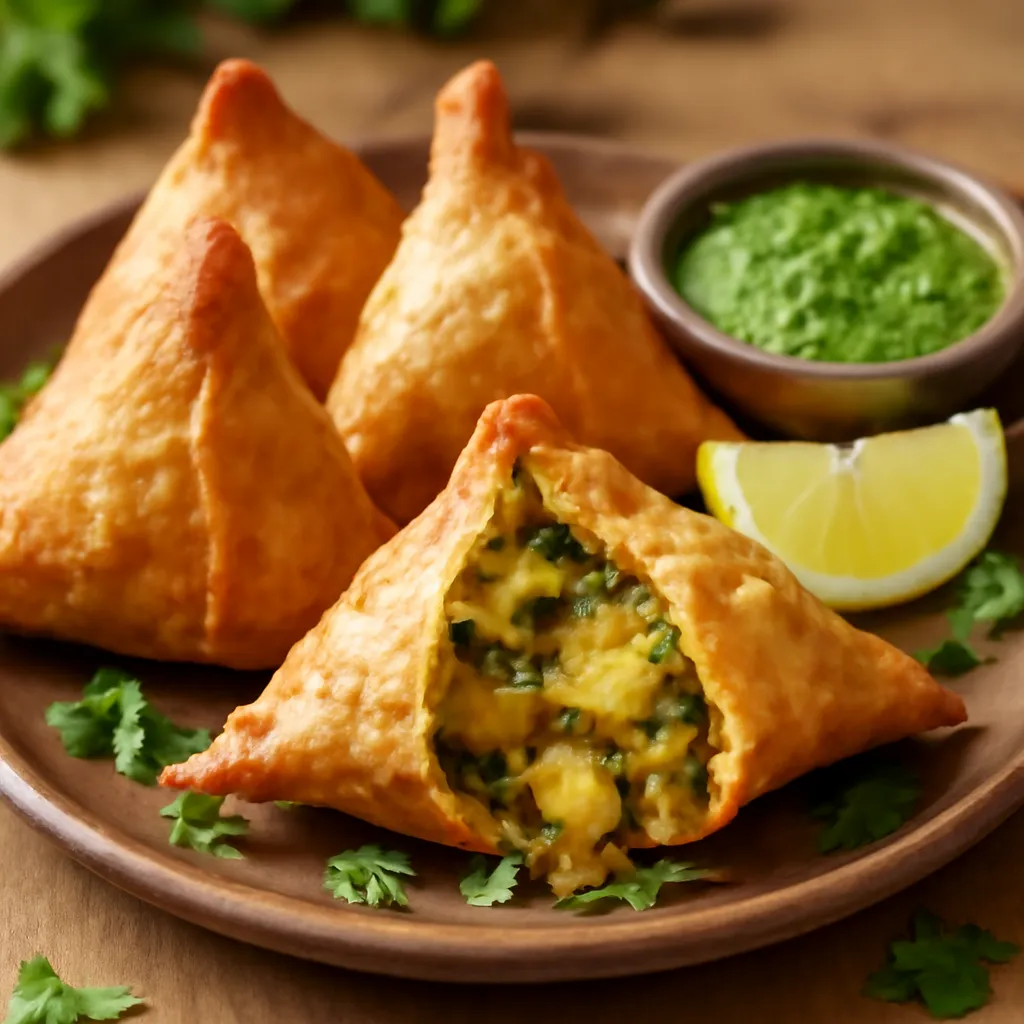
These homemade vegetable samosas pair a sturdy, blistered pastry with a warmly spiced potato, pea and carrot filling. Folding your own cones takes a little patience, but the reward is a snack far crisper and more fragrant than anything shop-bought.
Samosas are the undisputed king of Indian teatime, and homemade ones leave the freezer aisle for dust. The secret is twofold: a firm pastry rich enough to blister into crisp bubbles, and a dry, punchy filling built on cumin, ginger and garam masala. Fold, fill and fry low and slow for that signature shattering crunch.
Ingredients
Method
- Make the pastry first so it can rest. Rub the 4 tbsp oil into the flour and salt until the mixture resembles damp breadcrumbs, then add roughly 90ml cold water a splash at a time, bringing it together into a firm, stiff dough. Knead for 5 minutes until smooth, cover and rest for 30 minutes.
- Meanwhile, make the filling. Heat 2 tbsp oil in a wide pan over medium heat and add the cumin seeds. When they sizzle and smell toasty, add the diced carrot and cook for 4 minutes, then stir in the ginger and green chillies for a minute more.
- Add the garam masala, ground coriander and turmeric, stirring for 30 seconds until fragrant, then fold through the crushed potatoes and peas. Season well with salt, add the lemon juice and fresh coriander, and cook for 2 minutes. The filling should be dry, not wet. Leave to cool completely.
- Divide the rested dough into 6 balls. Roll each into a thin oval about 16cm long, then cut in half across the middle to give two half-moons. Work with one at a time, keeping the rest covered.
- Brush the straight edge of a half-moon with water. Fold it into a cone, overlapping the straight edges by about 1cm and pressing firmly to seal. Spoon in a heaped tablespoon of cooled filling, leaving 1cm at the top.
- Brush the open top edge with water, pinch it firmly shut and press with a fork to seal into a neat triangle. Repeat with the rest. Any gaps will let oil in, so seal thoroughly.
- Heat oil for deep-frying to 160C in a deep, heavy pan (a cube of bread should take about 40 seconds to brown). Fry the samosas in batches for 8-10 minutes, turning, until deep golden and blistered. Keep the heat moderate so the pastry cooks through and crisps rather than browning too fast.
- Lift out with a slotted spoon and drain on kitchen paper. Rest for a couple of minutes, then serve hot with chutney.
Serve it with
- Mint and coriander chutney
- Tamarind chutney
- Mango chutney
- A wedge of lemon
- Masala chai
Why this works
Frying at a moderate 160C rather than a fierce heat gives the stiff, oil-enriched pastry time to blister and cook through, producing the crisp, bubbled shell that defines a great samosa rather than a greasy, pale one.
Common swaps
- Swap 50g of the potato for cooked, crushed chickpeas for extra protein.
- No time for pastry? Use shop-bought filo or spring-roll wrappers and brush with oil to bake or fry.
- Replace peas with finely chopped green beans or sweetcorn.
- Use 1 tsp curry powder in place of the individual spices in a pinch.
Common mistakes to avoid
- Filling the samosas while the potato is still warm, which makes the pastry soggy and hard to seal.
- Leaving the filling wet; excess moisture steams the pastry and stops it crisping.
- Frying too hot, so the outside browns before the pastry cooks, leaving it doughy inside.
- Sealing the edges without water or pressure, so they burst open in the oil.
Storage, freezing & reheating
Storage: Keep cooled cooked samosas in an airtight container in the fridge for up to 3 days.
Freezing: Freeze uncooked, sealed samosas on a tray until solid, then bag for up to 3 months. Fry from frozen at 150C, adding a few extra minutes.
Reheating: Reheat in a 180C oven for 8-10 minutes until hot and crisp again; avoid the microwave, which softens the pastry.
Allergen notes: contains Gluten. Always check individual product labels.
Estimated nutrition
Per serving, estimated from typical ingredient values — not a substitute for precise dietary calculation.
| Calories | 310 kcal |
|---|---|
| Protein | 6g |
| Carbohydrate | 42g |
| Fat | 13g |