Usually works
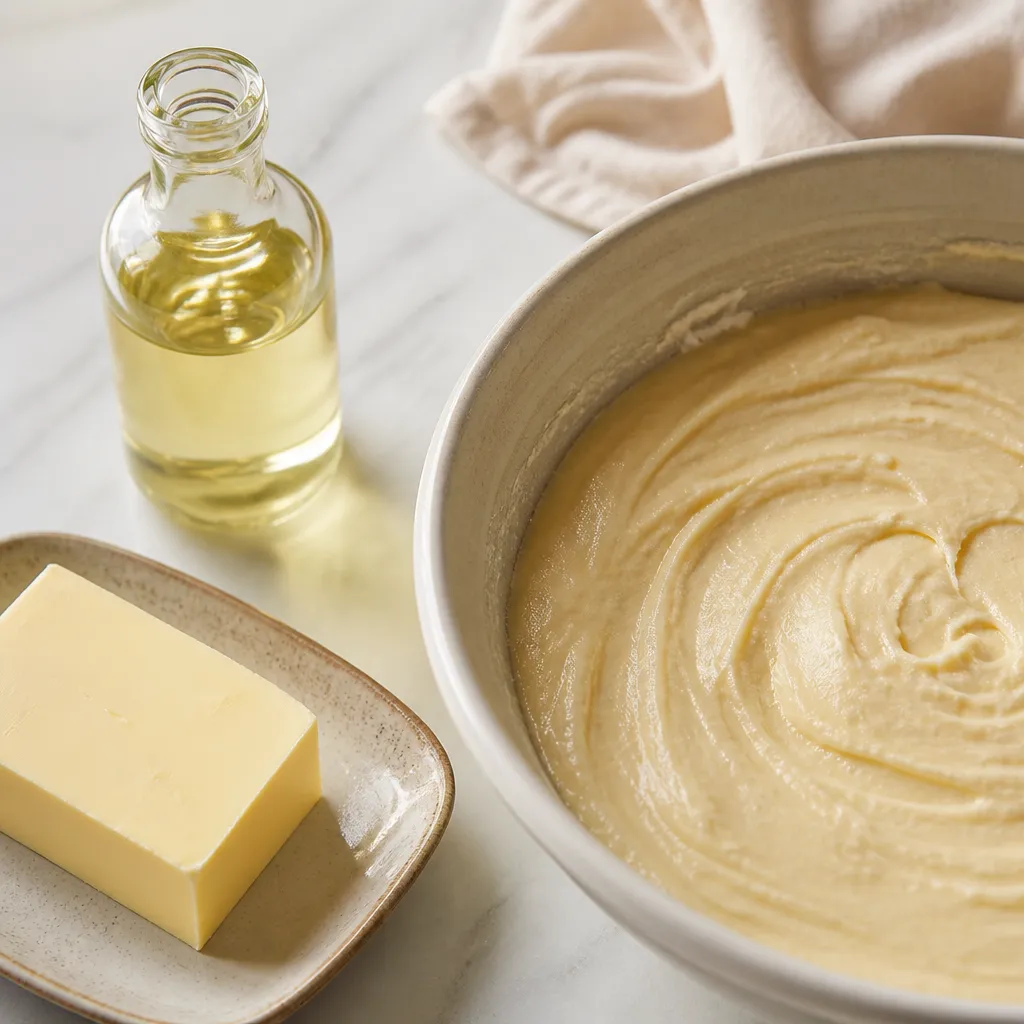
Best ratio: Use about ¾ the weight of oil to butter — roughly 75ml oil for every 100g butter. Choose a mild, flavourless oil such as sunflower or vegetable.
Swapping oil for butter in a cake is common and often an improvement — plenty of the moistest cakes (carrot, chocolate, banana) are made with oil precisely because it keeps them tender for days. But it isn’t a free swap for every recipe.
How much to use
Butter is about 80% fat and 20% water, while oil is 100% fat, so you need a little less. A good rule is ¾ the weight — around 75ml oil for 100g butter. Use a mild oil (sunflower, vegetable or light rapeseed); strong oils like extra-virgin olive will flavour the cake.
When it works — and when it doesn’t
Oil shines in moist, dense-crumbed cakes and muffins, and it’s handy for dairy-free baking. Where it struggles is creamed sponges — a Victoria sponge relies on beating air into solid butter and sugar, which oil can’t do, so you’ll get a flatter, denser result. And in bakes where butter is the flavour (shortbread, buttercream), there’s no substitute.
The trade-off
Expect a more moist, longer-keeping cake but a milder flavour and slightly less lift. For a middle path, some bakers use half butter (for flavour) and half oil (for moisture).
When it works
- Moist, close-textured cakes: carrot, chocolate, banana, coffee and traybakes.
- Muffins and loaf cakes, where a tender, long-keeping crumb is the goal.
- When you want a dairy-free bake (pair with a dairy-free milk).
When it doesn't work
- Classic creamed sponges like a Victoria sponge, where creaming butter with sugar provides the lift.
- Recipes where buttery flavour is the point — shortbread, buttercream, pound cake.
Taste & texture difference
Oil gives a more moist, tender crumb that stays fresh longer, but you lose butter's flavour and the light, aerated structure that creaming provides, so sponges can be a little denser.