Yes, it works
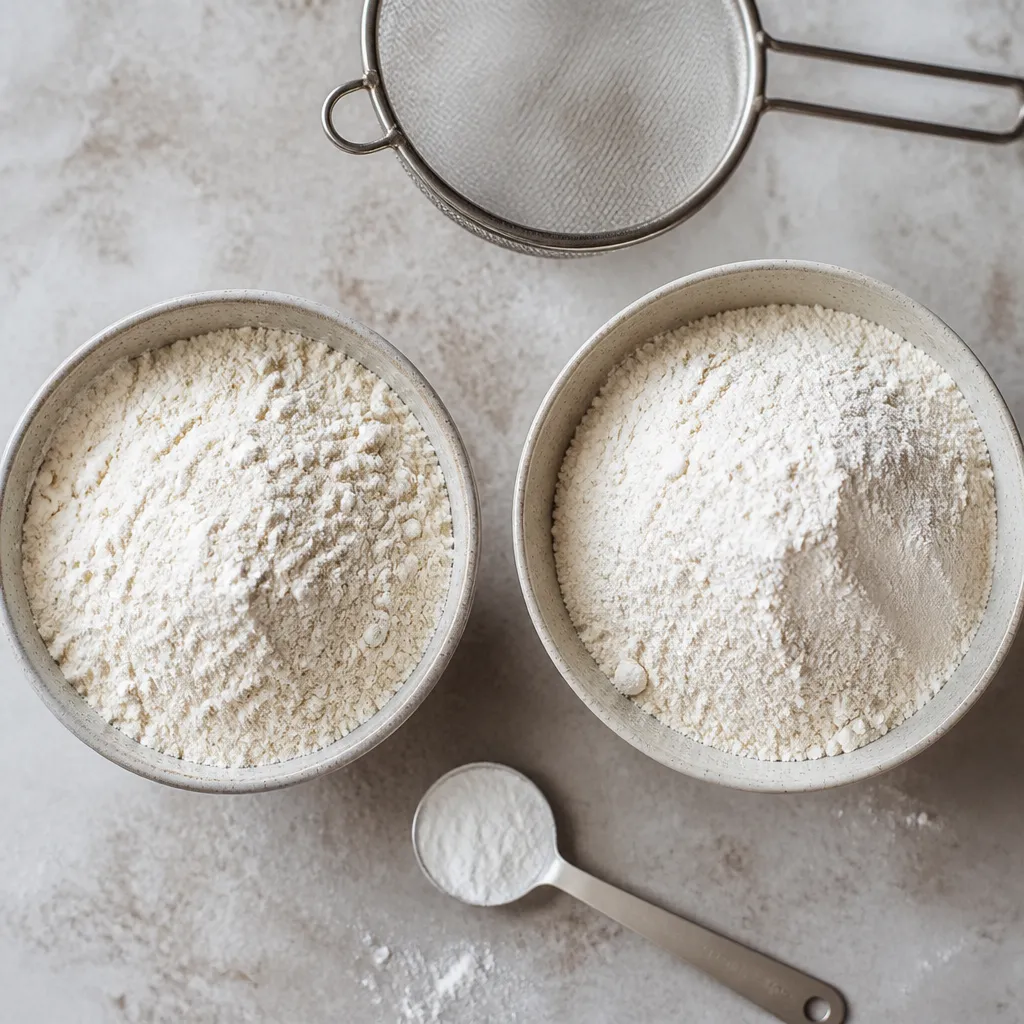
Best ratio: For every 200g plain flour, add 2 teaspoons of baking powder (and a small pinch of salt). Sift them together well so the raising agent is evenly distributed.
This is the easy one: you can absolutely use plain flour instead of self-raising — you just need to add the raising agent that self-raising already contains. It’s the most reliable flour swap there is.
The formula
For every 200g of plain flour, add 2 teaspoons of baking powder and a small pinch of salt. Whisk or sift them together thoroughly so the baking powder is evenly spread — patches of it can cause uneven rising or bitter spots. Scale it up or down: that’s roughly 1 teaspoon of baking powder per 100g.
Why it works
Self-raising flour is nothing more than plain flour with raising agent blended in at the factory. Adding your own baking powder recreates it exactly, which is why the results are indistinguishable in cakes, scones, muffins and pancakes.
The one thing to watch
The only way this swap fails is forgetting the baking powder — then there’s nothing to lift the bake and it comes out flat and heavy. If you bake often, it’s worth keeping both plain flour and baking powder in, since together they can stand in for self-raising any time.
When it works
- Any recipe that calls for self-raising flour — cakes, scones, muffins, pancakes and quick breads.
- Whenever you have plain flour and baking powder in the cupboard.
When it doesn't work
- Only fails if you forget the baking powder — then the bake comes out flat and dense.
Taste & texture difference
With the baking powder added, the results are virtually identical to using self-raising. Leave it out and the bake won't rise, turning heavy and close-textured.