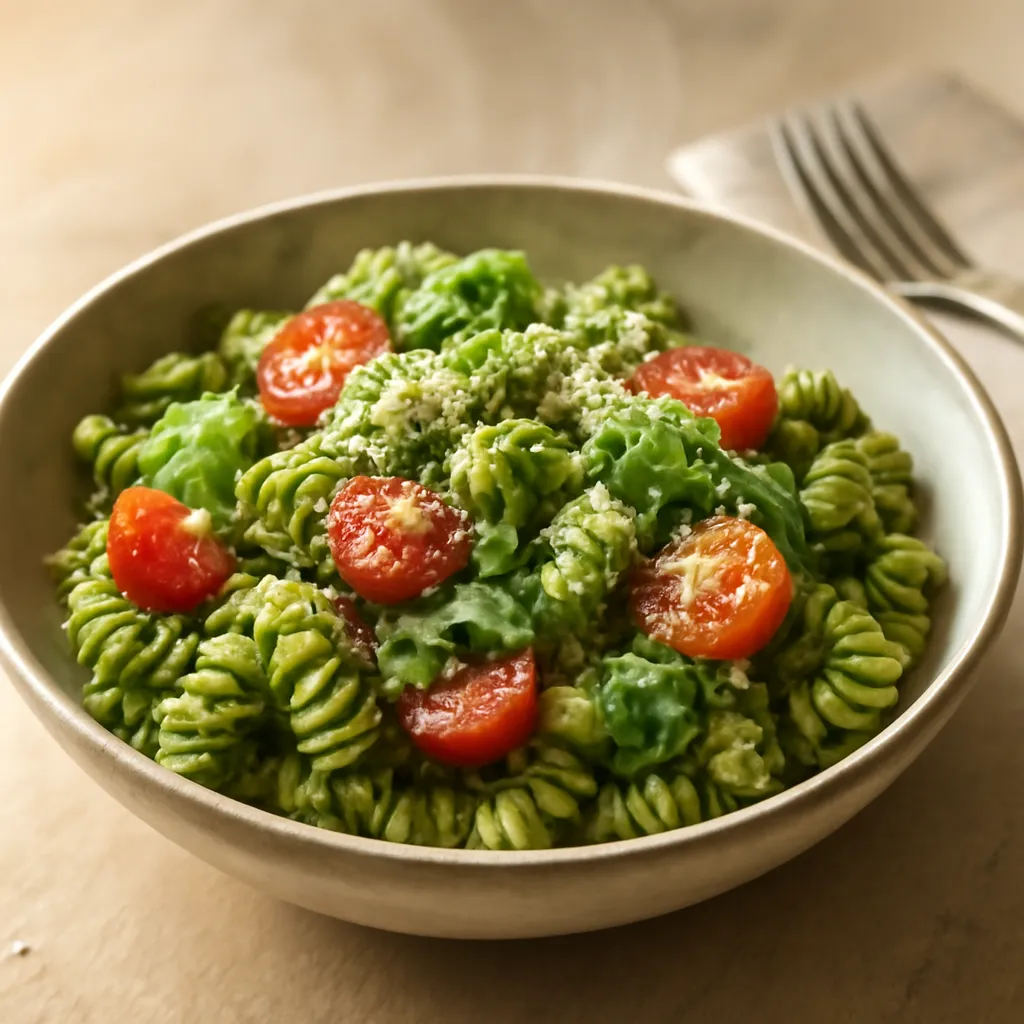
This is the fast, foolproof pesto pasta you'll come back to on busy weeknights. Starchy pasta water loosens the pesto into a glossy sauce that coats every piece, while a hit of lemon and parmesan keeps it lively rather than oily.
Pesto pasta lives or dies on one trick: never tip jarred pesto straight onto drained pasta. Loosen it with a ladle of the starchy cooking water instead, and it turns glossy and clings to every strand. This version takes minutes, uses store-cupboard basics, and tastes far brighter than the sum of its parts thanks to a squeeze of lemon.
Ingredients
Method
- Bring a large pan of water to a rolling boil, add the salt, then tip in the pasta. Cook according to the packet until al dente, usually 10 to 12 minutes, stirring now and then to stop it sticking.
- Just before draining, scoop out a mugful of the starchy cooking water and set it aside. Drain the pasta but don't rinse it.
- Return the empty pan to a very low heat. Add the pesto, olive oil and about 4 tablespoons of the reserved pasta water, then stir to loosen it into a smooth, glossy sauce.
- Tip the drained pasta back into the pan and toss well so every piece is coated, adding a splash more pasta water if it looks tight.
- Take the pan off the heat, then stir through the parmesan and a squeeze of lemon juice. The residual heat melts the cheese without splitting the sauce.
- Fold in the halved cherry tomatoes if using, and season with black pepper. Taste and adjust with a little more lemon or cheese.
- Serve straight away, scattered with torn basil and an extra grating of parmesan.
Serve it with
- A crisp rocket and parmesan salad
- Warm garlic ciabatta
- A glass of chilled white wine
- Griddled courgette or asparagus
- Extra chilli flakes for heat
Why this works
Starchy pasta water is the secret: its dissolved starch emulsifies the oil in the pesto into a creamy, clingy sauce rather than a greasy puddle. Adding the cheese off the heat keeps it silky instead of grainy.
Common swaps
- Swap green basil pesto for red pepper pesto for a sweeter, deeper flavour
- Use vegetarian Italian-style hard cheese in place of parmesan to keep it fully veggie
- Stir in a handful of baby spinach at the end for extra greens
- Add tinned tuna or shredded roast chicken to make it more substantial
- Toasted pine nuts or flaked almonds add welcome crunch
Common mistakes to avoid
- Pouring pesto onto hot pasta over direct heat, which cooks the basil and dulls the flavour and colour
- Forgetting to save pasta water, so the sauce stays thick and refuses to coat the pasta
- Rinsing the drained pasta, which washes away the starch the sauce needs to cling
- Over-salting, since pesto and parmesan are both already salty
Storage, freezing & reheating
Storage: Keep leftovers in an airtight container in the fridge for up to 2 days. The pesto may firm up once cold, so loosen with a splash of water when reheating.
Reheating: Reheat gently in a pan over a low heat with a splash of water or olive oil, stirring until warmed through. Avoid a fierce heat or the pesto can turn oily and dull.
Allergen notes: contains Milk, Gluten, Nuts. Always check individual product labels.
Estimated nutrition
Per serving, estimated from typical ingredient values — not a substitute for precise dietary calculation.
| Calories | 620 kcal |
|---|---|
| Protein | 18 g |
| Carbohydrate | 76 g |
| Fat | 27 g |