Sometimes
Best ratio: Use about 3 times as much baking powder as the bicarbonate called for, since baking powder is much weaker. It's a rough fix, not a perfect match.
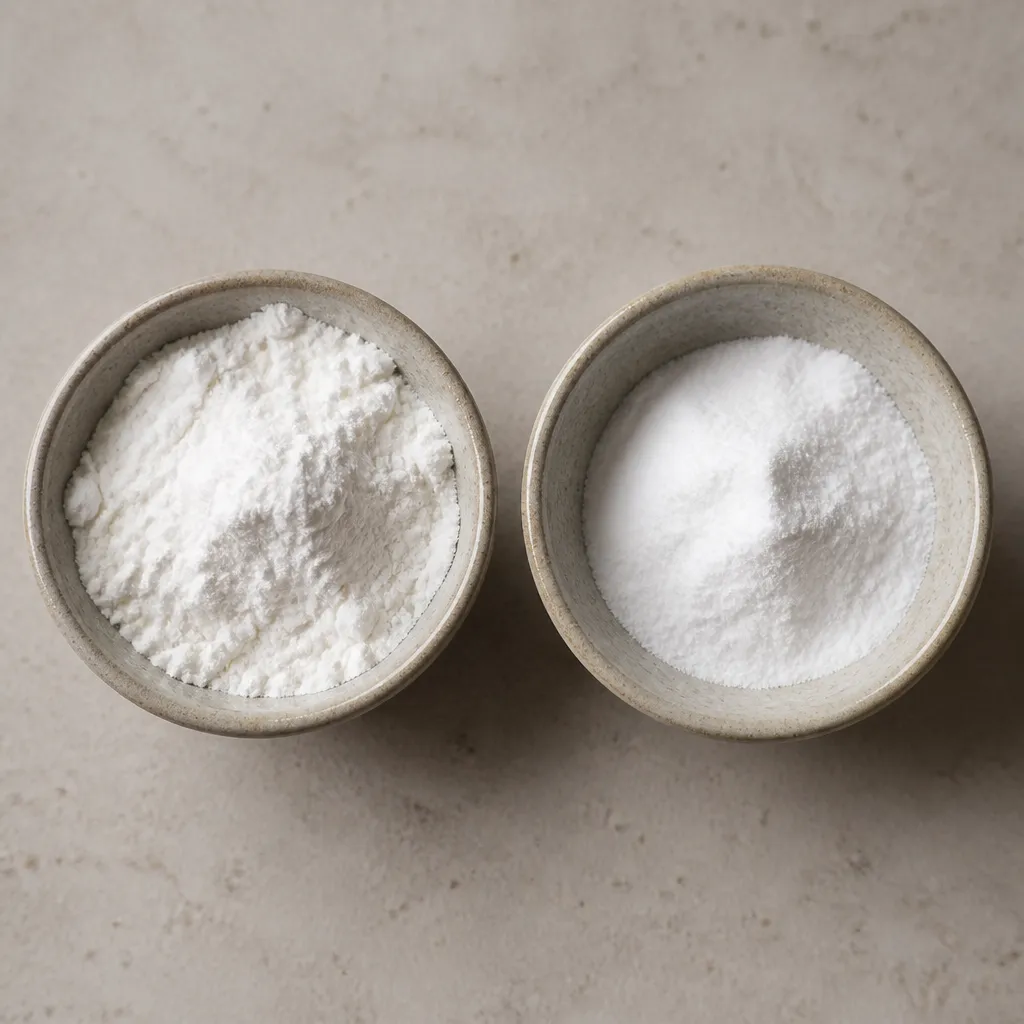
Bicarbonate of soda and baking powder are both raising agents, but they’re not the same, so swapping one for the other is a compromise rather than a clean substitution. Bicarb is pure and strong; baking powder is bicarb already blended with a mild acid and a filler, which makes it much weaker.
Making the swap work
If you’re caught short, use roughly three times as much baking powder as the bicarb the recipe asks for. It’ll give some lift, but it’s not perfect — bicarb is often there to react with an acidic ingredient (like buttermilk, lemon or cocoa) and neutralise it, and baking powder can’t do that job as well. For the reliable result, it’s worth having both in the cupboard.
When it works
- In a pinch, for cakes and muffins where a little extra rise is needed.
- When the recipe doesn't rely on bicarb reacting with a specific acid.
When it doesn't work
- Recipes with lots of acid (buttermilk, lemon, cocoa) that need bicarb to neutralise it — the result can taste flat or oddly acidic.
- Where the amount is large, as too much baking powder tastes bitter.
Taste & texture difference
Baking powder already contains its own acid, so swapping can change the flavour balance and give a different, sometimes lesser, rise. Large amounts can leave a faintly bitter, metallic taste.