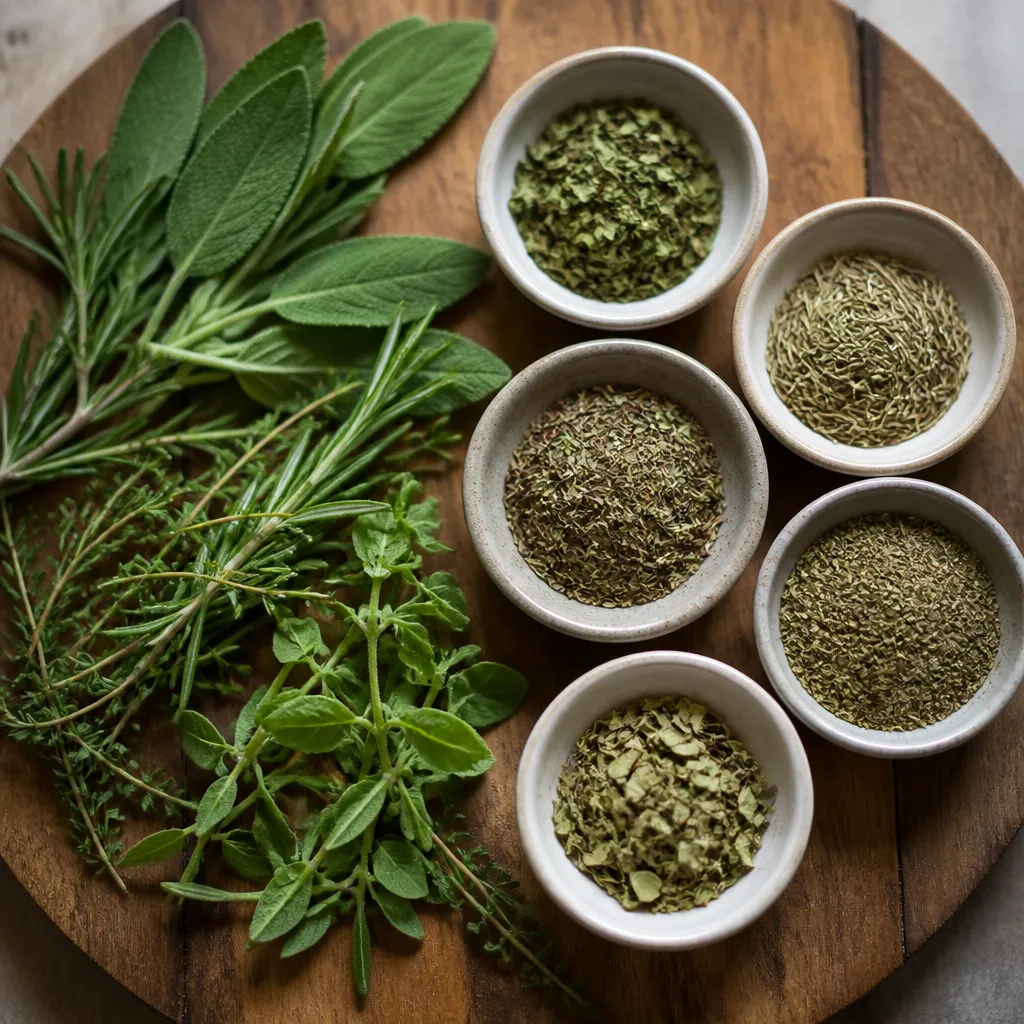
Usually works
Best ratio: Use about one third as much dried herb as fresh — roughly 1 teaspoon dried for every 1 tablespoon of fresh. Add dried herbs earlier in cooking, not at the end.
Dried herbs are a perfectly good stand-in for fresh in most cooked dishes — you just need far less, because drying concentrates their flavour. The rule of thumb is to use about a third of the fresh quantity.
Timing is everything
The other key difference is when you add them. Dried herbs need heat and time to rehydrate and release their flavour, so add them early — at the start of a stew, sauce or roast — rather than at the end. This is why hardy herbs like oregano, thyme and rosemary dry so well. Delicate herbs used raw, like basil, parsley and coriander, are a different matter: dried versions are a pale imitation, so keep those fresh where you can.
When it works
- Hardy herbs like oregano, thyme, rosemary and bay in stews, sauces and roasts.
- Slow-cooked dishes where the dried herbs have time to soften and release flavour.
- Marinades, rubs and dressings.
When it doesn't work
- Delicate herbs used raw or as a garnish — basil, coriander, parsley, chives — where fresh flavour and colour matter.
- Finishing a dish, since dried herbs need cooking to taste their best.
Taste & texture difference
Dried herbs are more concentrated and earthy, with a mellower, less vibrant flavour than fresh. They lose the bright, aromatic lift of fresh herbs, so they suit cooked dishes rather than fresh finishing.