Sometimes
Best ratio: Dilute it: about 1 tablespoon of tomato purée mixed with 3–4 tablespoons of water gives a rough passata equivalent. Adjust to the consistency you need.
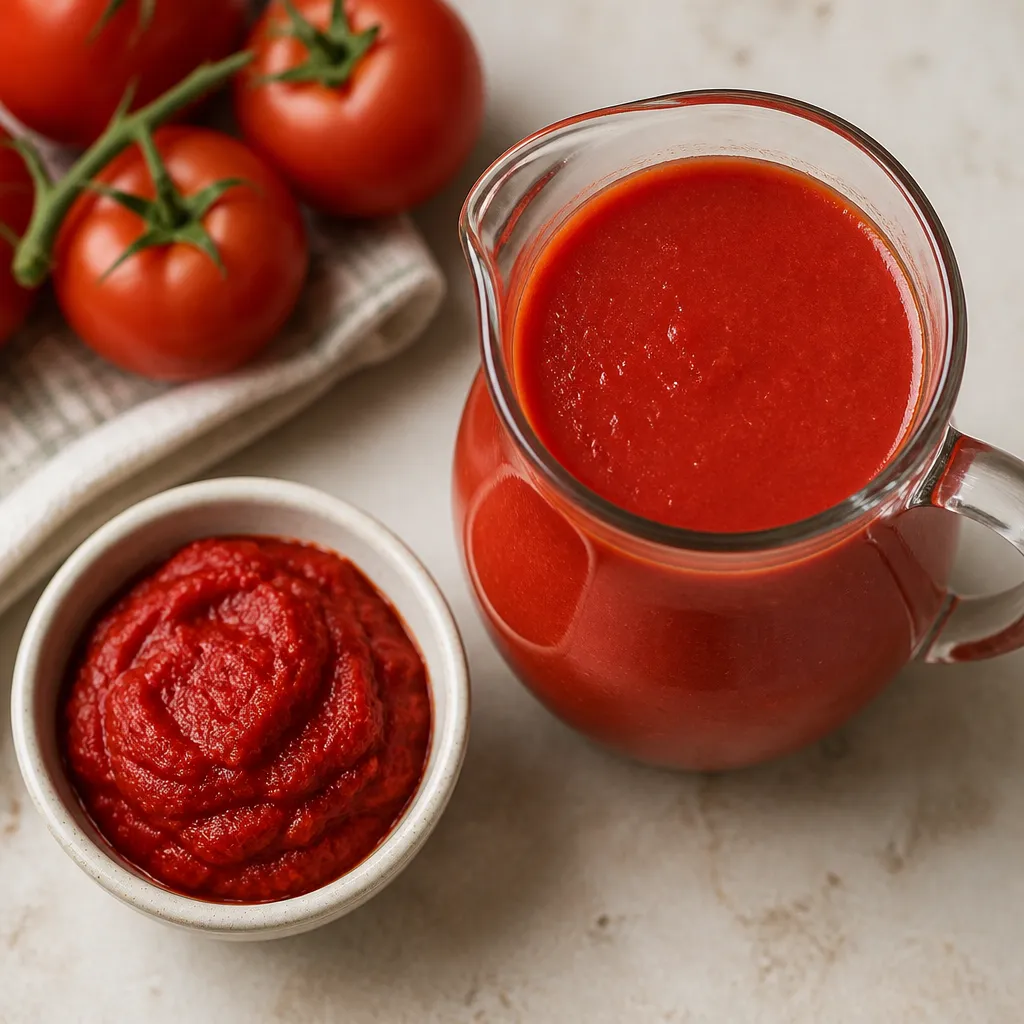
Tomato purée and passata are both made from tomatoes, but they’re very different products. Passata is simply sieved raw tomatoes — pourable and fresh-tasting. Tomato purée (or paste) is tomatoes cooked right down to a thick, intense concentrate, so you can’t swap them straight across.
How to bulk it out
The trick is dilution: stir 1 tablespoon of purée into 3–4 tablespoons of water to get something roughly passata-like, then adjust. This works well when you want tomato depth in a sauce, stew or curry that you can loosen with stock or water. For a dish that’s essentially all passata — like a fresh tomato pasta sauce — it’s less successful, as you’d need a lot of purée and the flavour is deeper and more cooked.
When it works
- Adding tomato depth to sauces, stews and curries where you can top up with liquid.
- When you only need a small amount of passata and don't want to open a whole carton.
When it doesn't work
- Dishes that need a large volume of smooth tomato base, like a simple tomato pasta sauce — you'd need a lot of dilution and it won't taste the same.
- Where passata's fresh, lighter tomato flavour is the point.
Taste & texture difference
Tomato purée is intensely concentrated and cooked-down, so it tastes deeper and more savoury but less fresh than passata. Diluted, it works as a base, but it's richer and thicker in character.