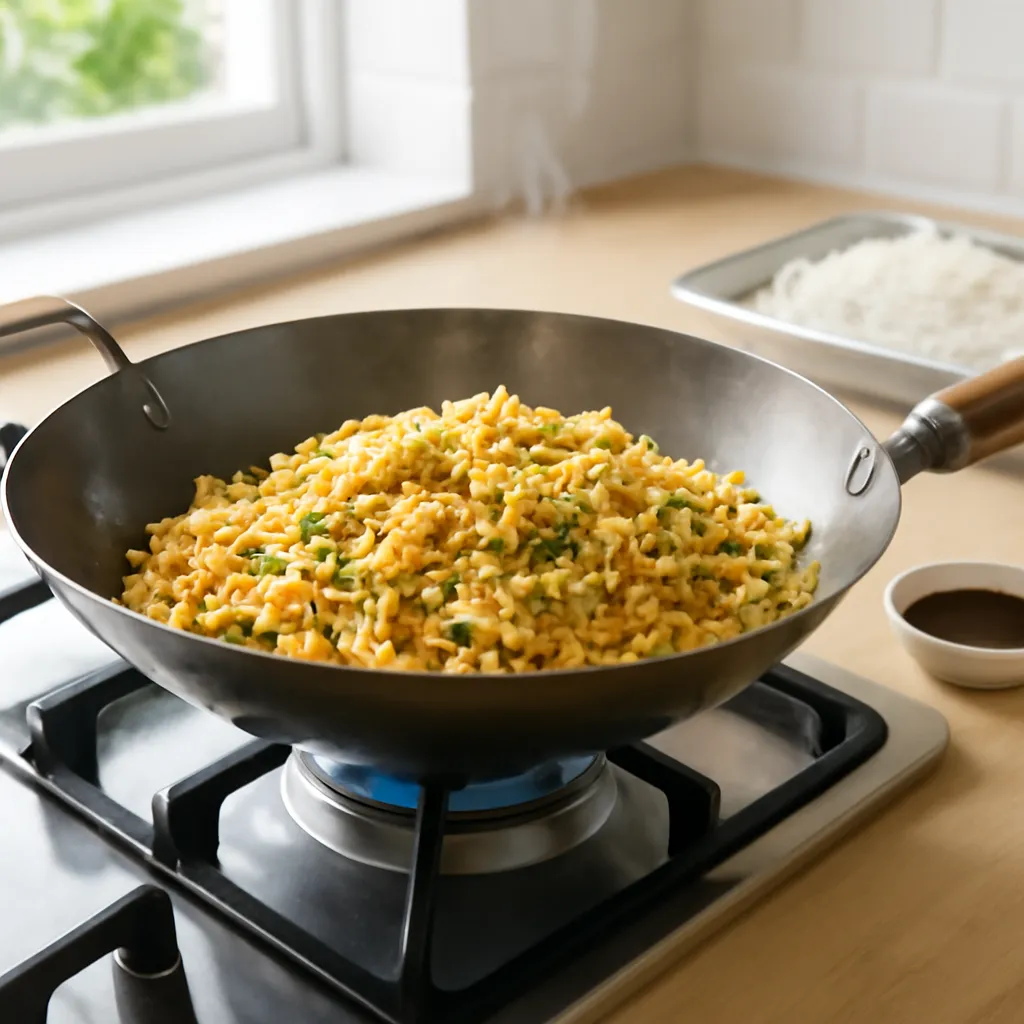
Quick answer: Use cold, day-old rice cooked slightly dry, then fry in small batches over the highest heat your hob will give. Get the oil shimmering, scramble the egg first and set it aside, break every clump with the back of a spatula, and season at the end with light soy, a little sugar and toasted sesame oil.
Takeaway fried rice tastes different because of heat and moisture, not secret ingredients. Restaurant burners hit temperatures a domestic hob cannot, so the home fix is to remove as much water as possible before the rice hits the pan and to cook less rice at once. Get those two things right and the rest is seasoning.
Why day-old cold rice works best
Freshly cooked rice is swollen with water and its surface starch is soft and sticky. In a pan that water flashes to steam, the temperature crashes, and you get gluey, steamed rice rather than fried rice.
Chilling overnight does two useful things. The grains lose surface moisture in the fridge, and the starch retrogrades — it firms up and the grains separate cleanly. Aim for rice cooked with about 10% less water than usual, spread on a tray, then chilled uncovered for at least 4 hours, ideally overnight.
No day-old rice? Cook it, spread it thinly on a large tray and put it in the freezer for 20–30 minutes until cold and dry to the touch. Long-grain or jasmine rice is ideal; basmati is acceptable; short-grain and risotto rice are too starchy.
Cooling and storing rice safely
Uncooked rice can carry Bacillus cereus spores, which survive boiling and multiply fast in rice left sitting warm. This is the one part of fried rice that is genuinely worth being strict about.
- Spread cooked rice on a cold tray in a thin layer — depth matters far more than fan speed.
- Get it into the fridge within 1 hour of cooking.
- Fridge at 5°C or below, and use within 24 hours.
- Reheat once only, until piping hot throughout (75°C+).
High heat and small batches
A domestic hob delivers roughly 2–3 kW; a restaurant wok burner is often 20 kW or more. You cannot match that, so compensate by loading the pan lightly.
| Pan | Max rice per batch | Oil | Preheat |
|---|---|---|---|
| 28cm carbon-steel wok | 300g cooked | 1.5 tbsp | 2–3 min, until it smokes faintly |
| 28cm heavy frying pan | 250g cooked | 1.5 tbsp | 2–3 min |
| Non-stick pan | 200g cooked | 1 tbsp | 2 min, medium-high only |
Use a high smoke-point oil — groundnut, rapeseed or sunflower (around 220–230°C). Never olive oil. Preheat the dry pan first, then add the oil; it should shimmer and move like water within seconds. Serve batch one while batch two cooks rather than doubling up.
Breaking up clumps and timing the egg
Break the cold rice up before it goes near the pan. Tip it into a bowl and press through the lumps with wet fingers or the back of a spoon until every grain is loose. Doing this in a hot pan costs you 60 seconds of heat you cannot spare.
For the egg, there are two good routes:
- Scramble-and-set-aside (most reliable): cook beaten egg in the hot oil for 30 seconds, break into soft curds, remove, and fold back in at the very end so it stays tender.
- Coated grains (takeaway-style): toss cold rice with beaten egg — about 1 egg per 250g rice — before frying, so each grain gets a thin golden jacket.
Either way, the rice itself only needs 3–4 minutes in the pan: spread it flat, leave it undisturbed for 30 seconds to catch, then toss. Repeat. Constant stirring means no colour.
Getting the seasoning right
Takeaway fried rice is savoury and slightly sweet, never dark or salty. Per 250g cooked rice:
- 1 tbsp light soy sauce (dark soy only for colour, ½ tsp maximum)
- ½ tsp caster sugar
- ¼ tsp white pepper — the flavour most people cannot place
- ½ tsp toasted sesame oil, off the heat at the end
- A pinch of MSG or ¼ chicken stock cube, crumbled, if you want the full effect
Add soy around the edge of the hot pan, not onto the rice. It sizzles and caramelises on the metal, which builds flavour instead of simply wetting the grains. Spring onion greens go in with the heat off.
Food safety: Cool cooked rice quickly — thin layer on a cold tray, into the fridge within 1 hour, at 5°C or below, and use within 24 hours. Reheat once only, until piping hot throughout. Hot oil at frying temperature will scald badly. Pat wet ingredients dry before adding them, add food away from you, and keep the pan handle turned in so it cannot be knocked. If oil catches fire, turn off the heat and smother it with a fire blanket or a metal lid. Never move a pan of burning oil and never throw water on it — the water flashes to steam and blasts burning oil upwards.