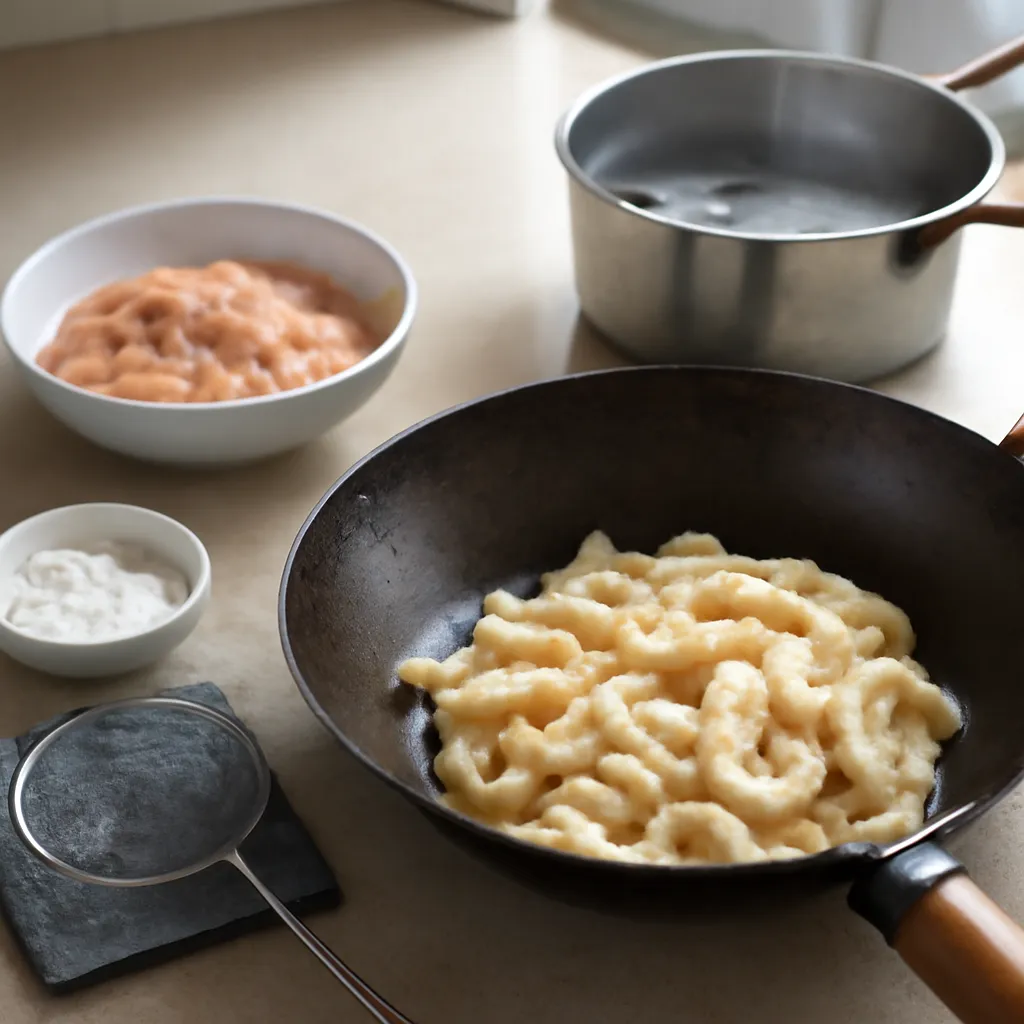
Quick answer: Velveting coats sliced chicken in egg white, cornflour, wine and salt, then part-cooks it gently before the stir-fry. Use 1 egg white, 1 tbsp cornflour and 1 tbsp Shaoxing wine per 400g. Blanch 45-60 seconds in 80°C water or 130°C oil, then finish in the wok.
Velveting is the single biggest difference between takeaway stir-fry chicken and the dry, stringy version most of us make at home. It takes five minutes of prep and half an hour of waiting, and it works on chicken breast, thigh, pork loin and prawns alike.
Why velveting works
Three things happen at once in the marinade.
- Egg white sets into a thin, soft gel around each slice at a low temperature, sealing in moisture before the meat’s own proteins can squeeze it out.
- Cornflour hydrates into a slippery coating that insulates the meat from fierce heat and gives that glossy, sauce-clinging surface.
- Salt dissolves some of the muscle protein so the meat holds more water — a mini brine.
The second half is just as important: the chicken is gently part-cooked at a low temperature before it ever meets a hot wok. Chicken breast starts squeezing out water hard above 70°C, so blanching at 80°C water or 130°C oil takes it most of the way through without that violent contraction.
The ratios
Slice chicken across the grain, 3-5mm thick, then mix in this order and let it sit 30 minutes in the fridge (up to 4 hours is fine).
| Per 400g sliced chicken | Amount | Job |
|---|---|---|
| Egg white | 1 (about 30g) | Soft protective gel |
| Cornflour | 1 tbsp (10g) | Slippery coating, gloss |
| Shaoxing wine or dry sherry | 1 tbsp | Flavour, cuts the eggy note |
| Fine salt | 1/2 tsp | Water retention |
| Neutral oil | 1 tsp, stirred in last | Stops the slices clumping |
For stubbornly firm breast, add 1/4 tsp bicarbonate of soda per 250g, leave 20 minutes maximum, then rinse thoroughly and pat dry before marinating. Longer, or unrinsed, and it turns soapy and spongy.
Water-blanching (the home-kitchen default)
This is the method to use unless you have a reason not to — no litre of oil, no smoke, no washing up.
- Bring a wide pan of water to the boil, then take it off the heat until it stops bubbling — roughly 80°C, with steam but no movement.
- Slide in the chicken a handful at a time, stirring gently so it separates.
- Poach 45-60 seconds, until the slices turn opaque and float. They should still be slightly underdone in the middle.
- Lift out with a spider, drain well and spread on a plate. Use within a few minutes.
Oil-blanching (for takeaway richness)
Oil gives a marginally silkier, richer result and is what most restaurants do.
| Stage | Temperature | Time |
|---|---|---|
| Oil-blanch (pass through) | 120-140°C | 45-60 seconds |
| Too cool — coating sheds | below 110°C | — |
| Too hot — crust forms, meat dries | above 160°C | — |
Use 600ml neutral oil in a deep saucepan, no more than a third full, and a probe thermometer. Fry in two or three batches so the temperature does not crash. Drain on kitchen paper. Cooled and strained, the oil keeps for a couple more stir-fries.
Finishing in the wok
Blanched chicken needs almost no more cooking. Stir-fry the aromatics and vegetables first, add your sauce, let it thicken, then return the chicken for the final 30-60 seconds — just long enough to heat through to a safe 75°C and take on the glaze. Add it any earlier and you undo the whole job.
Food safety: Chicken must reach 75°C right through before serving; blanching only part-cooks it, so the wok stage is what finishes the job. Never fill a pan more than a third with oil, and never leave it unattended — wet chicken added to hot oil will spit violently. If oil catches fire, turn off the heat and smother it with a fire blanket or a damp tea towel. Never move a burning pan and never throw water on it. Raw marinade is a contamination risk: use a separate board and bowl, and wash hands and utensils before touching cooked chicken or serving plates.