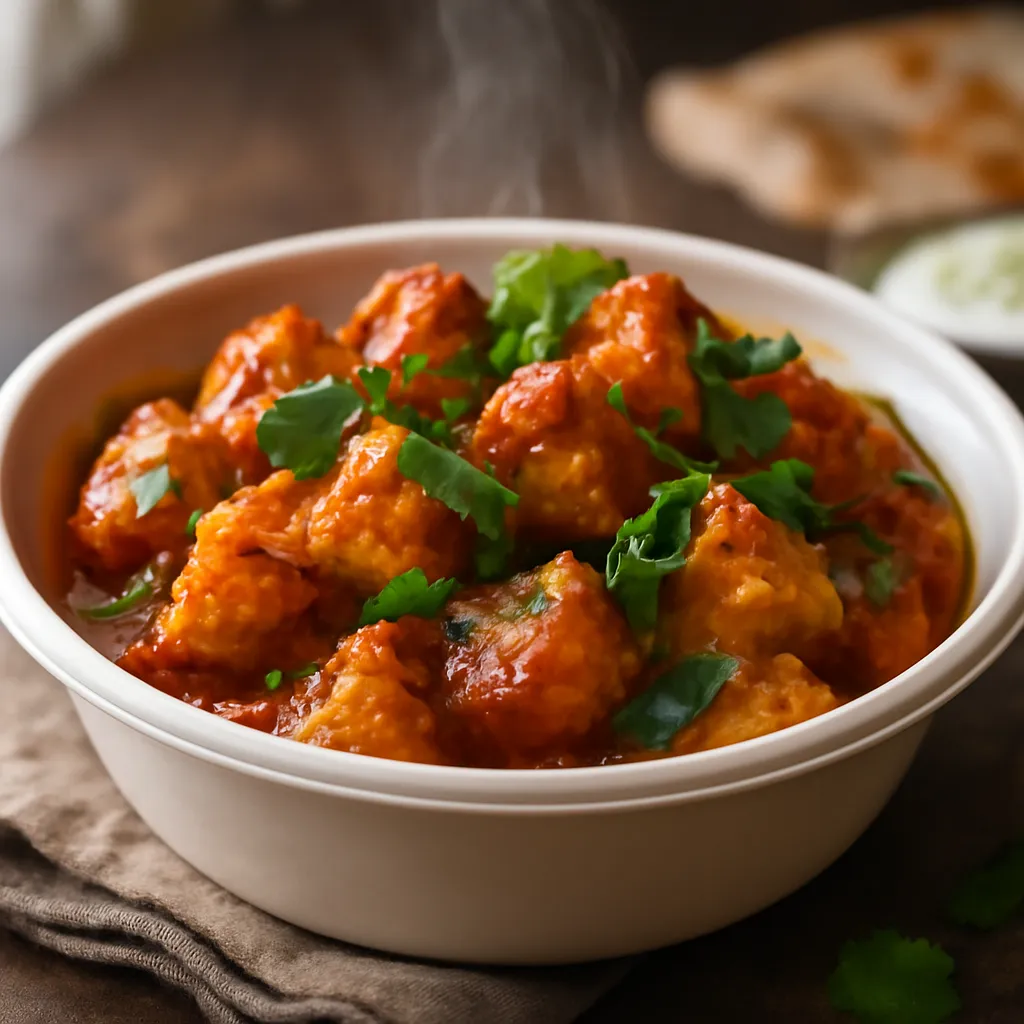
Parboiled potatoes are roughed up and fried hard in a tempered spice oil until the edges shatter, then folded through a thick, glossy tomato masala so every piece is coated rather than swimming. It is the classic Indian takeaway side dish, and it comes together in one pan on the hob in about 35 minutes.
Takeaway Bombay potatoes are never boiled potatoes in sauce. The pieces have crisp, craggy edges, the masala clings in a glossy coat rather than pooling, and the whole thing smells of mustard seeds hitting hot oil. Parboil, rough up, fry hard, then fold through a reduced tomato masala at the very end. That order is the whole dish.
Ingredients
Method
- Put the potatoes in a large pan of cold water with the salt, bring to the boil and simmer for 7-8 minutes, until a knife slides in about halfway with resistance. They should be underdone in the middle. Drain in a colander and leave to steam-dry for 5 minutes.
- Put the lid on the colander and shake it hard two or three times to rough up the surfaces. Those fluffed, broken edges are what crisp up later, so do not be gentle.
- Heat 4 tablespoons of the oil in a large, wide frying pan or shallow casserole over a high heat. The oil should be shimmering at around 180°C, hot enough that a potato chunk sizzles the instant it lands. Add the potatoes in a single layer, working in two batches if your pan is not wide enough, and fry each batch for 8-10 minutes, turning only every 2-3 minutes, until deeply golden and crisp on most sides. Crowding drops the oil temperature and steams them. Season with salt, lift out onto a plate and set aside.
- Turn the heat to medium and add the last tablespoon of oil to the same pan. Add the mustard seeds and wait for them to pop and skitter, about 20 seconds, then add the cumin seeds and curry leaves. They will crackle sharply, so stand back.
- Add the onion and cook for 5-6 minutes until soft and lightly coloured at the edges. Stir in the ginger-garlic paste and green chillies and fry for 1 minute more, until the raw garlic smell has gone.
- Add the turmeric, ground coriander and Kashmiri chilli powder and stir for 20 seconds only, then tip in the tomatoes before the ground spices catch. Add a good pinch of salt.
- Cook the masala over a medium-high heat for 8-10 minutes, stirring often and squashing the tomatoes against the pan, until it darkens, thickens to a paste and you can see oil separating at the edges. This is the point most home versions stop too early, and it is what makes the sauce glossy instead of watery.
- Return the potatoes to the pan and fold gently with a spatula so every piece is coated in the thick masala. Cook for 2 minutes, just enough to warm through, adding a splash of hot water only if the pan looks dry.
- Take off the heat and scatter over the garam masala, amchoor and most of the coriander. Fold through once, taste for salt and sharpness, and serve straight away with the rest of the coriander on top.
Serve it with
- A dry-ish curry such as chicken bhuna or tarka dhal
- Warm naan or chapatis for scooping
- Plain basmati rice or pilau
- Cucumber and mint raita to cool things down
- Lemon wedges and sliced red onion
Why this works
The takeaway trick is that the potatoes and the sauce are cooked separately and only married at the end. Frying parboiled, roughed-up potatoes hard gives shattery edges, while cooking the tomato masala until the oil visibly splits out concentrates it into a glossy paste that coats rather than soaks, so the crisp survives all the way to the plate.
Common swaps
- No amchoor? Finish with a tablespoon of lemon juice instead for the same sour lift.
- Curry leaves are hard to find fresh; frozen ones from an Asian grocer are excellent, and dried are fine. Bay leaves are not a substitute, so leave them out rather than swap.
- Charlotte or new potatoes work if you prefer waxy chunks that hold their shape, though you will lose some of the fluffy, crisp edge.
- Add 200g of blanched cauliflower florets or peas with the potatoes to turn it into aloo gobi or aloo mutter.
- Ginger-garlic paste can be replaced with equal amounts of crushed garlic and grated ginger, fried a minute longer.
Common mistakes to avoid
- Boiling the potatoes all the way through. They collapse into mash when you fold them into the sauce; take them out while still firm in the centre.
- Crowding the frying pan or stirring constantly. The potatoes steam instead of browning, and no amount of masala rescues a soft edge.
- Stopping the tomato masala while it is still loose and bright red. Cook until it darkens and oil beads at the edge, or the sauce will be thin and taste raw.
- Adding garam masala early. Its aroma burns off; it belongs off the heat at the very end.
Storage, freezing & reheating
Storage: Cool quickly and refrigerate in a sealed container for up to 3 days. The potatoes will soften as they sit, which is normal.
Freezing: Freezes for up to 2 months, though the texture becomes softer and more stew-like. Defrost fully in the fridge before reheating.
Reheating: For the best texture, reheat in a dry frying pan over a medium-high heat with a teaspoon of oil, pressing the potatoes down and leaving them undisturbed for a few minutes to re-crisp the edges. The microwave works but gives a soft, curry-house-at-midnight result. An air fryer at 190°C for 6-8 minutes is the closest to freshly made.
Estimated nutrition
Per serving, estimated from typical ingredient values — not a substitute for precise dietary calculation.
| Calories | 330 kcal |
|---|---|
| Protein | 6 g |
| Carbohydrate | 45 g |
| Fat | 14 g |