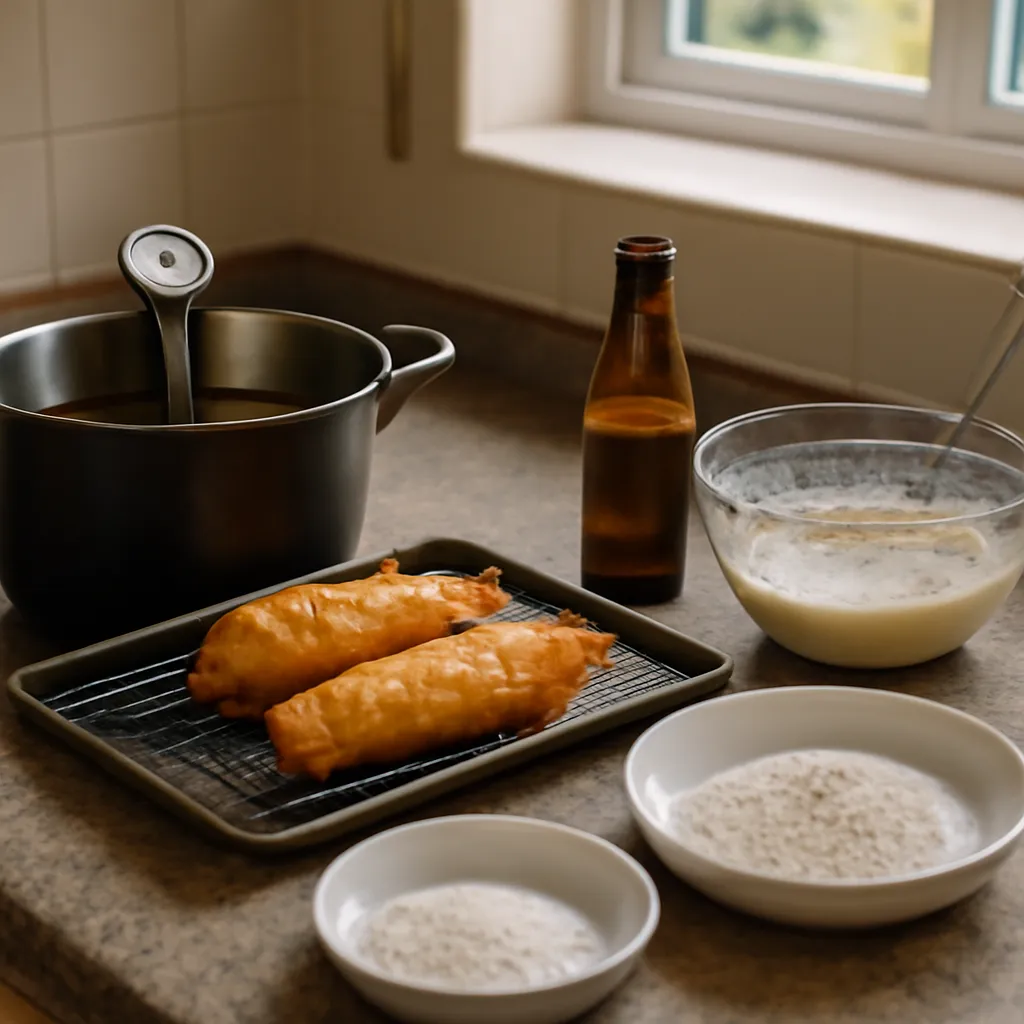
Quick answer: Whisk 100g plain flour with 30g cornflour and 1 tsp baking powder, then add 180ml ice-cold sparkling water or lager to a double-cream consistency, leaving lumps. Dredge dry, patted food in seasoned flour first so the batter clings, then fry at 180°C until pale gold and crisp.
Batter does two jobs: it shields food from fierce heat so it steams gently inside, and it dries into a brittle, glassy shell outside. Get the ratio, the temperature and the dredge right and it works every time — no fryer needed, just a deep pan and a thermometer.
The science in one minute
Crispness is the absence of water. When batter hits hot oil, its water flashes to steam and blows the coating open into a lacy structure; that outrush of steam is also what stops oil soaking in. So you want plenty of water, very little gluten, and heat high enough to drive the water off fast.
Gluten is the enemy of crisp. Overworked batter turns leathery and shrinks away from the food. Keep the mix cold and lumpy — cold slows gluten development, and those lumps fry into crunchy nubbles.
Flour, cornflour and raising agents
- Plain flour is the base — lower protein than strong bread flour, so less gluten.
- Cornflour has no gluten at all and fries into a dry, sandy crispness. Replace 20–30% of the flour with it. Push past 40% and the coating goes powdery and pale.
- Self-raising flour works as a shortcut, but you get a puffier, more chip-shop crumb. If you use it, skip added baking powder.
- Bicarbonate of soda or baking powder (about 1 tsp per 100g flour) releases CO₂ in the pan for lift. Bicarb also nudges the batter alkaline, which browns it faster — useful with plain water.
- A pinch of salt in the batter, plus well-seasoned dredging flour.
| Batter | Flour | Cornflour | Raising | Liquid |
|---|---|---|---|---|
| Classic fish (beer) | 100g plain | 30g | 1 tsp baking powder | 180ml ice-cold lager |
| Light tempura-style | 80g plain | 40g | none | 180ml ice-cold sparkling water |
| Fakeaway chicken | 120g plain | 40g | 1 tsp bicarb | 200ml cold water or buttermilk |
Liquid: beer, sparkling water or plain water
Lager is the classic for a reason. It’s cold, carbonated, and its alcohol evaporates faster than water — so the shell dries sooner and stays crisp longer. It also browns well and adds a faint malty flavour. Sparkling water gives a paler, cleaner, lighter result: ideal for prawns and vegetables. Plain water is fine with added bicarb, but gives a denser coat. Whatever you use, it must be fridge-cold or iced.
Consistency, resting and dredging
Aim for single-to-double cream: it should coat a spoon and drip off in a steady ribbon, leaving a thin translucent film. Too thin and it slides off; too thick and it goes doughy.
Resting depends on the liquid: a beer or plain-water batter benefits from 15–20 minutes’ rest in the fridge, letting the flour hydrate so it clings. A carbonated batter should be used within 2–3 minutes, while the bubbles are still in it.
Dredging is the step most people skip. Batter will not stick to a wet surface.
- Pat the food bone dry with kitchen paper.
- Dredge in seasoned flour (plain flour, salt, pepper), then tap off every loose speck.
- Dip into the batter, lift, let the excess run off for two seconds.
- Lower it away from you into the oil, holding the end for a second so it sets straight.
Frying temperatures
Use a deep, heavy pan no more than one-third full of a neutral oil — sunflower, rapeseed or groundnut. Use a probe thermometer; guesswork is how batter goes greasy.
| Food | Oil temp | Time |
|---|---|---|
| Cod or haddock fillet (150g) | 180°C | 6–8 min |
| Prawns, squid | 190°C | 2–3 min |
| Chicken thigh pieces | 170°C | 8–10 min |
| Vegetables, onion rings | 180°C | 3–4 min |
Fry in small batches — crowding drops the oil temperature and the batter absorbs oil instead of shedding it. Let the oil recover to temperature between batches. Drain on a wire rack, never kitchen paper, or trapped steam will soften the underside within a minute.
Food safety: Never fill a pan more than one-third with oil, and never leave it unattended — hot oil can reach its flashpoint and ignite in minutes. If oil catches fire, turn off the heat if it is safe to do so, cover the pan with a lid or fire blanket and leave the room. Never move a pan of burning oil and never throw water on it — it will erupt in a fireball. Pat food completely dry before it goes near the oil. Water or ice hitting 180°C oil causes violent spitting and can scald. Cook fish and chicken through: chicken should reach 75°C at the thickest point, and fish should flake easily. A crisp shell is no guarantee the inside is done.