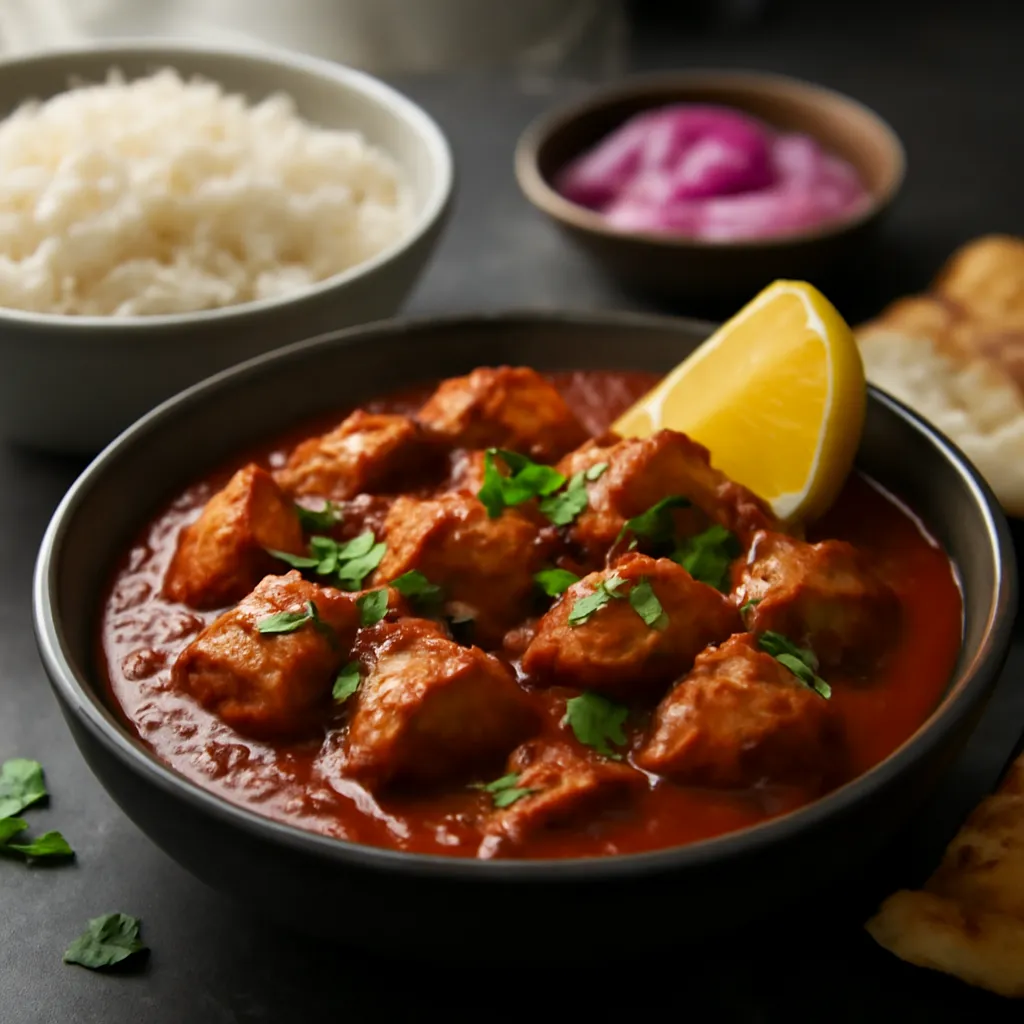
Tender chicken thigh in a fiery, deep-red madras sauce built the way a curry house builds it: whole spices bloomed in oil, onions cooked far past soft, and the masala fried until the oil splits out red. Hob only, ready in under an hour, and hot enough to make you reach for the rice.
Madras is the takeaway’s benchmark hot curry, and the version most home cooks make comes out thin and dusty. The difference is not more chilli. It is time in the pan: onions cooked to a jammy brown, tomato and spice fried until the oil separates and runs red at the edges, then chicken finished in that concentrated base until glossy.
Ingredients
Method
- Season the chicken chunks with 1 tsp salt and set aside while you build the base. Mix the Kashmiri chilli, hot chilli powder, ground coriander and turmeric in a small bowl with 4 tbsp cold water to make a loose paste. Wetting the spices stops them scorching when they hit the hot pan.
- Heat 4 tbsp of the oil in a wide, heavy pan over a medium-high heat. Add the cumin seeds, curry leaves and cardamom pods and let them sizzle for 20-30 seconds until the cumin darkens a shade and smells nutty. Do not walk away here.
- Tip in the onions with a good pinch of salt and cook, stirring often, for 15 minutes over a medium heat. You want them well past translucent and into proper golden brown and collapsing, sticking a little to the base. This is where the sweetness and body of the sauce come from, so give it the full time.
- Stir in the ginger-garlic paste and fry for 2 minutes until the raw smell goes. Add the wet spice paste and cook for 1 minute, stirring constantly, then add the blitzed tomatoes and the fenugreek leaves, crumbling them between your palms.
- Now fry the masala hard: keep the heat at medium and stir every 30 seconds for 8-10 minutes until the mixture darkens, thickens to a paste that holds its shape, and you can see red oil separating out around the edges. That split is your signal, and it is the whole dish. If it catches, add a splash of water and carry on.
- Add the chicken and turn it through the masala so every piece is coated. Fry for 3-4 minutes to seal, then pour in the hot stock and the remaining 1 tbsp oil. Bring to a simmer.
- Simmer uncovered for 15-18 minutes, stirring now and then, until the chicken is cooked through with no pink in the middle and the sauce has reduced to a loose, glossy gravy that coats the back of a spoon. Do not lid it; you are reducing, not stewing.
- Off the heat, stir in the garam masala and the juice of half the lemon. Taste and adjust: more salt if it tastes flat, more lemon if it tastes heavy. Rest for 5 minutes, then serve piping hot with the remaining lemon in wedges.
Serve it with
- Basmati rice, rinsed until the water runs clear
- Garlic and coriander naan for mopping
- Cooling cucumber and mint raita
- Sliced red onion with lemon and a pinch of chilli powder
- Bombay potatoes or a simple tarka dal
Why this works
The takeaway trick is bhuna, frying the onion-tomato-spice base until the oil visibly splits out red before any liquid goes in. That step concentrates the sugars and cooks the raw edge off the chilli, which is what gives madras its dark depth and glossy finish rather than the thin, gritty heat of a rushed curry.
Common swaps
- No Kashmiri chilli powder: use 1 tbsp sweet smoked paprika plus 1 tbsp mild chilli powder for the same colour without extra heat.
- No fenugreek leaves: leave them out rather than substituting fenugreek seeds, which are bitter. A teaspoon of dried mint gets you a little of the way there.
- Chicken breast works if that is what you have; add it at the stock stage and simmer for only 10-12 minutes so it does not go stringy.
- For a vegetarian version, swap the chicken for 2 tins of drained chickpeas and 300g diced potato, and simmer until the potato is tender.
- Ginger-garlic paste can be replaced with equal amounts of garlic and ginger blitzed with a splash of water; a shop-bought jar is fine.
Common mistakes to avoid
- Rushing the onions. Ten minutes gives you soft onions and a pale, watery curry; fifteen to twenty gives you the brown, jammy base a madras is built on.
- Adding the stock before the oil splits. Once liquid goes in, the masala stops frying and starts boiling, and you can never get that depth back.
- Adding dry chilli powder straight to hot oil. It burns in seconds and turns the whole pan acrid. Slake it with water first.
- Putting the garam masala in early. Its aromatics are volatile and cook away; it goes in off the heat, at the very end.
Storage, freezing & reheating
Storage: Cool quickly, then keep covered in the fridge for up to 3 days. Like most curries it improves overnight as the spices settle.
Freezing: Freezes very well for up to 3 months. Portion into tubs, cool completely, and leave a little headroom. Defrost overnight in the fridge before reheating.
Reheating: Reheat in a pan over a medium heat with a splash of water or stock, stirring until piping hot all the way through, about 6-8 minutes. Add a fresh squeeze of lemon before serving to wake the flavours back up. Microwaving works but stir halfway and cover, or the sauce splits at the edges.
Allergen notes: contains Celery (present in many stock cubes and powders - check the label). Always check individual product labels.
Estimated nutrition
Per serving, estimated from typical ingredient values — not a substitute for precise dietary calculation.
| Calories | 520 kcal |
|---|---|
| Protein | 45g |
| Carbohydrate | 16g |
| Fat | 31g |