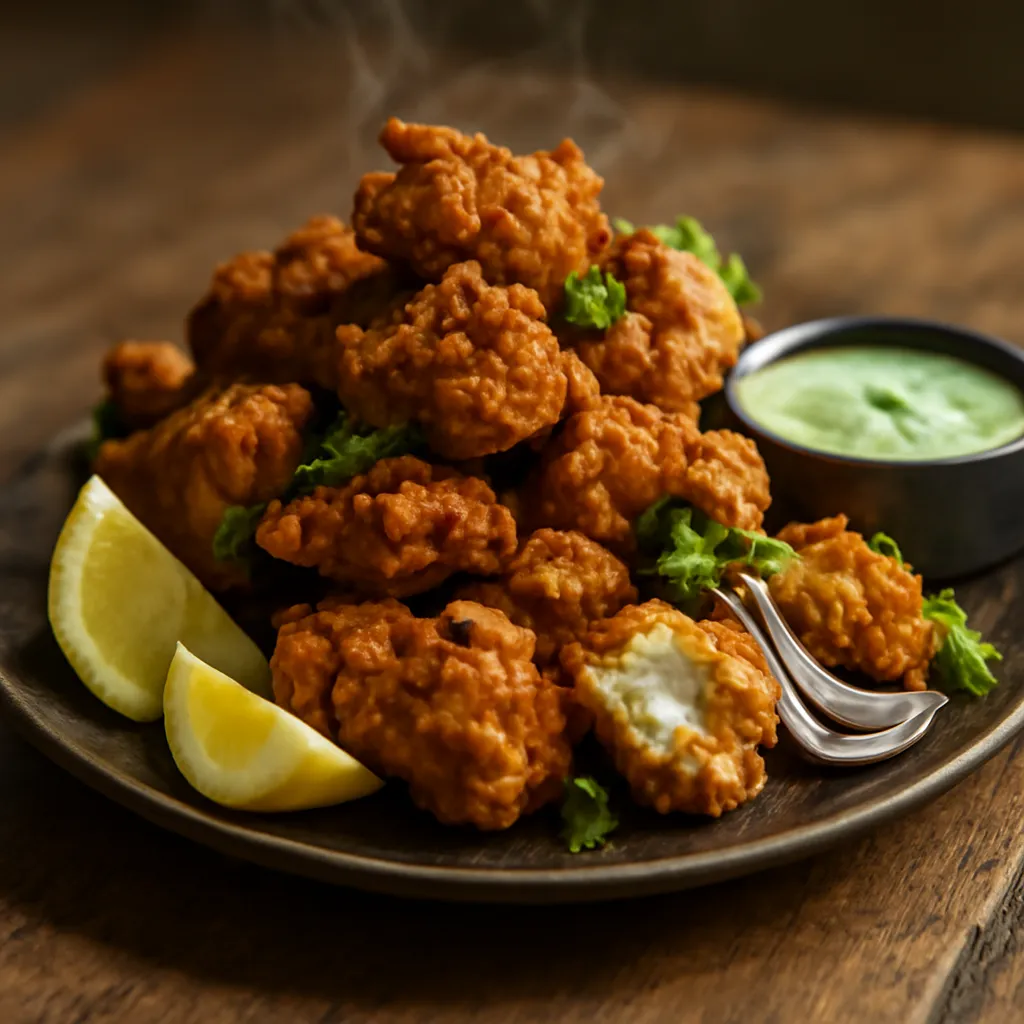
Bite-sized chicken thigh marinated in ginger-garlic, yoghurt and warm spices, then coated in a thick gram flour batter and fried until deep gold and crackling. It is the starter that disappears before the mains land, and it takes half an hour from fridge to plate. Serve piled high with lemon, sliced onion and mint raita.
Chicken pakora is the plate that vanishes first at every Indian takeaway: nuggets of marinated thigh in a spiced gram flour coating that shatters when you bite. The secret is a thick, clinging batter and a proper 180°C fry, so the outside crisps hard before the chicken has time to dry out. Add a squeeze of lemon and a bowl of mint raita and you’re there.
Ingredients
Method
- Put the chicken in a bowl with the yoghurt, ginger-garlic paste, chilli powder, cumin, coriander, turmeric, ajwain and salt. Mix hard with your hands so every piece is coated, then leave for 15 minutes while you get everything else ready. Longer is fine - up to 4 hours in the fridge.
- Tip the gram flour, cornflour and bicarbonate of soda straight into the marinated chicken and toss until the pieces look claggy and dry-ish. Now add the cold water a tablespoon at a time, mixing after each, until the coating is the thickness of soft porridge and clings to the chicken in ridges. It should drape, not run - if it drips off, add another tablespoon of gram flour.
- Pour the oil into a deep, heavy pan no more than a third full and heat to 180°C. No thermometer? Drop in a teaspoon of batter: it should sink briefly, then bob straight back up wrapped in steady bubbles and turn gold in about 45 seconds. If it browns instantly the oil is too hot; if it sits and seeps, it is too cool. Our guide at /guides/how-to-deep-fry-safely-at-home/ covers pan choice and what to do if things go wrong.
- Fry in four batches of 8-10 pieces, lowering each in with your fingers or a spoon so the craggy edges stay intact. Crowding the pan drops the oil temperature and gives you greasy, pale pakora, so keep the batches small and let the oil climb back to 180°C between them.
- Fry each batch for 4-5 minutes, turning once or twice, until deep golden brown and crackling. Cut into the thickest piece of the first batch to check: the chicken should be white and cooked through with no pink, and the juices should run clear. Adjust your timing for the rest from there.
- Lift onto a wire rack set over a tray - not kitchen paper, which traps steam and softens the underside. Keep the finished batches warm in a low oven, still on the rack, while you fry the remainder.
- For the takeaway crunch, fry the lot a second time: return each batch to the oil, now nudged up to 190°C, for 45-60 seconds until the coating is a shade darker and audibly crisp. Drain again on the rack.
- Scatter the hot pakora with the garam masala and a final pinch of salt while the oil is still glistening so it sticks, then pile onto a warm plate with lemon wedges. Serve immediately, piping hot.
Serve it with
- Mint and coriander raita, or plain yoghurt loosened with lemon and chopped mint
- Thinly sliced red onion tossed with lemon juice and a pinch of salt
- Mango chutney or tamarind sauce for dipping
- Warm naan and a bowl of chana masala to turn it into a light meal
- A cold lager or a salty lime soda
Why this works
The takeaway trick is two-fold: cornflour cut into the gram flour so the crust sets hard and glassy instead of turning cakey, and a second, hotter fry that drives off the last of the surface moisture. Adding the flours dry to the wet marinated chicken - rather than making a separate batter and dunking - builds the shaggy, uneven coating that catches the oil and crisps into ridges.
Common swaps
- Chicken breast works if that is what you have - cut it a little larger, into 4cm pieces, and fry for 3-4 minutes so it does not dry out.
- No ajwain? Use dried thyme leaves, or leave it out and add an extra 1/2 tsp cumin.
- Swap the chicken for cauliflower florets or thick paneer batons for a vegetarian version; fry cauliflower for 5-6 minutes, paneer for 3.
- Kashmiri chilli powder can be replaced by 1 tsp sweet paprika plus a small pinch of cayenne for the same red colour.
- Dairy-free: use 3 tbsp coconut yoghurt or simply 2 tbsp lemon juice in place of the natural yoghurt.
Common mistakes to avoid
- Batter too thin. It slides off in the oil and you end up with bald chicken and a pan full of crumbs. Aim for a coating thick enough to hold ridges on the spoon.
- Oil too cool. Below about 165°C the coating absorbs oil instead of sealing, and the pakora come out heavy and greasy. Let the temperature recover between batches.
- Draining on kitchen paper. Steam gets trapped underneath and softens the crust within a minute. A wire rack over a tray keeps all sides crisp.
- Salting and spicing after the pakora have cooled. Garam masala and salt only stick while the surface is hot and glossy, so season the second they come out.
Storage, freezing & reheating
Storage: Best eaten straight from the pan. Cooked pakora keep in an airtight container in the fridge for up to 2 days; the coating will soften but reheating brings it back.
Freezing: Freeze cooked, cooled pakora in a single layer on a tray, then bag for up to 2 months. Reheat from frozen - no need to defrost.
Reheating: Never microwave, or the crust goes limp. Spread on a wire rack over a baking tray and reheat in a hot oven at 200°C for 8-10 minutes from chilled, or 12-14 minutes from frozen, until crisp again and piping hot. An air fryer at 190°C for 5-6 minutes does the same job.
Allergen notes: contains Milk. Always check individual product labels.
Estimated nutrition
Per serving, estimated from typical ingredient values — not a substitute for precise dietary calculation.
| Calories | 470 kcal |
|---|---|
| Protein | 36 g |
| Carbohydrate | 28 g |
| Fat | 24 g |