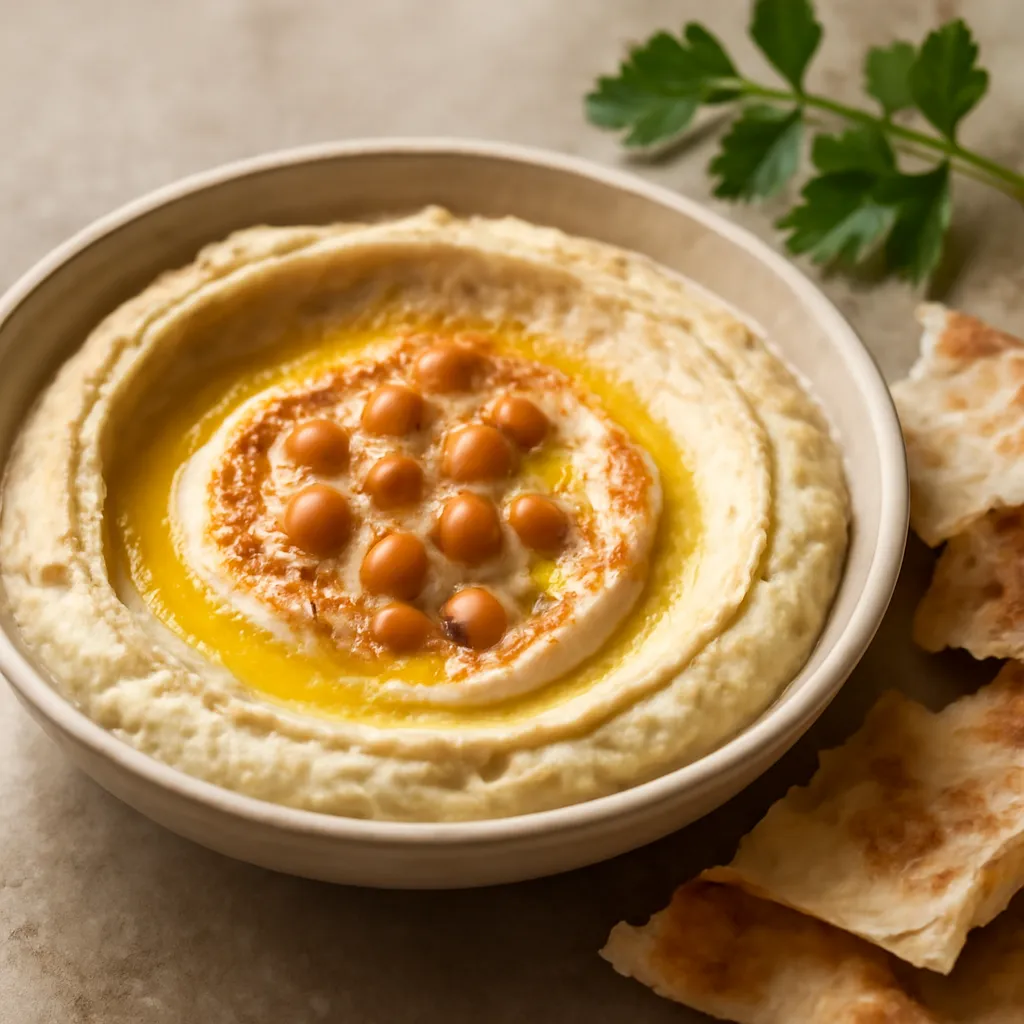
This is authentically smooth Middle Eastern hummus, built on generous tahini, sharp lemon and raw garlic mellowed by ice water. A tin of chickpeas and a blender are all you need. The trick is whipping it longer than feels necessary until it turns pale and mousse-like.
Good hummus lives or dies on two things: enough tahini and enough patience at the blender. Skip the shop tubs and you get a fresher, lemon-bright dip with a genuinely velvety texture. This version leans on the classic Levantine ratio, then uses a splash of ice water to whip it luxuriously light. Scoop, swirl and drizzle generously.
Ingredients
Method
- Drain the chickpeas, keeping a little of the tin liquid aside. For the smoothest result, tip them into a bowl of cold water and rub between your hands to loosen the papery skins, then float and pour off as many skins as you can. Skip this if you're short on time.
- Add the lemon juice, grated garlic and salt to the blender or food processor first, and blitz for 20 seconds. Letting the raw garlic sit in the acid takes the harsh edge off it.
- Add the tahini and cumin, then blend again until the mixture thickens and turns pale and claggy. Don't panic if it seizes up, that's exactly what should happen.
- Add the chickpeas and blend for a full 2 to 3 minutes, scraping down the sides once or twice. It will look grainy at first, then gradually smooth out.
- With the motor running, trickle in the ice-cold water a tablespoon at a time. This is what lightens the texture, so keep going until the hummus is glossy, pale and almost fluffy.
- Taste and adjust: more salt for depth, more lemon for brightness, a splash of the reserved chickpea liquid if it needs loosening. It should be soft enough to fall slowly off a spoon.
- Spoon into a shallow bowl and use the back of the spoon to make a swirl. Pour olive oil into the well, dust with paprika or sumac and serve at room temperature.
Serve it with
- Warm flatbread or pitta
- Crudites such as carrot, cucumber and pepper
- Falafel
- A scatter of toasted pine nuts
- Grilled halloumi or lamb koftas
Why this works
Blending the acid and garlic before adding the chickpeas mellows the garlic and emulsifies the tahini, while a few tablespoons of ice water whip air into the paste for that signature light, creamy body.
Common swaps
- No tahini? Use smooth cashew or almond butter, though the flavour shifts
- Swap lemon for lime at a pinch, using slightly less
- Roast half the chickpeas for a nuttier, warmer version
- Add a roasted red pepper or a spoon of harissa for a spiced twist
Common mistakes to avoid
- Under-blending: two to three minutes is the minimum for a silky texture
- Skimping on tahini, which leaves the dip thin and lacking richness
- Forgetting the ice water, so the hummus stays dense rather than light
- Using too much raw garlic, which turns bitter and overpowering by the next day
Storage, freezing & reheating
Storage: Keep covered in the fridge for up to 4 days, with a thin layer of olive oil on top to stop it drying out. Bring back to room temperature and stir before serving.
Freezing: Freezes well for up to 3 months in an airtight tub; thaw overnight in the fridge and beat in a little olive oil or water to bring the texture back.
Allergen notes: contains Sesame. Always check individual product labels.
Estimated nutrition
Per serving, estimated from typical ingredient values — not a substitute for precise dietary calculation.
| Calories | 250 kcal |
|---|---|
| Protein | 8 g |
| Carbohydrate | 18 g |
| Fat | 16 g |