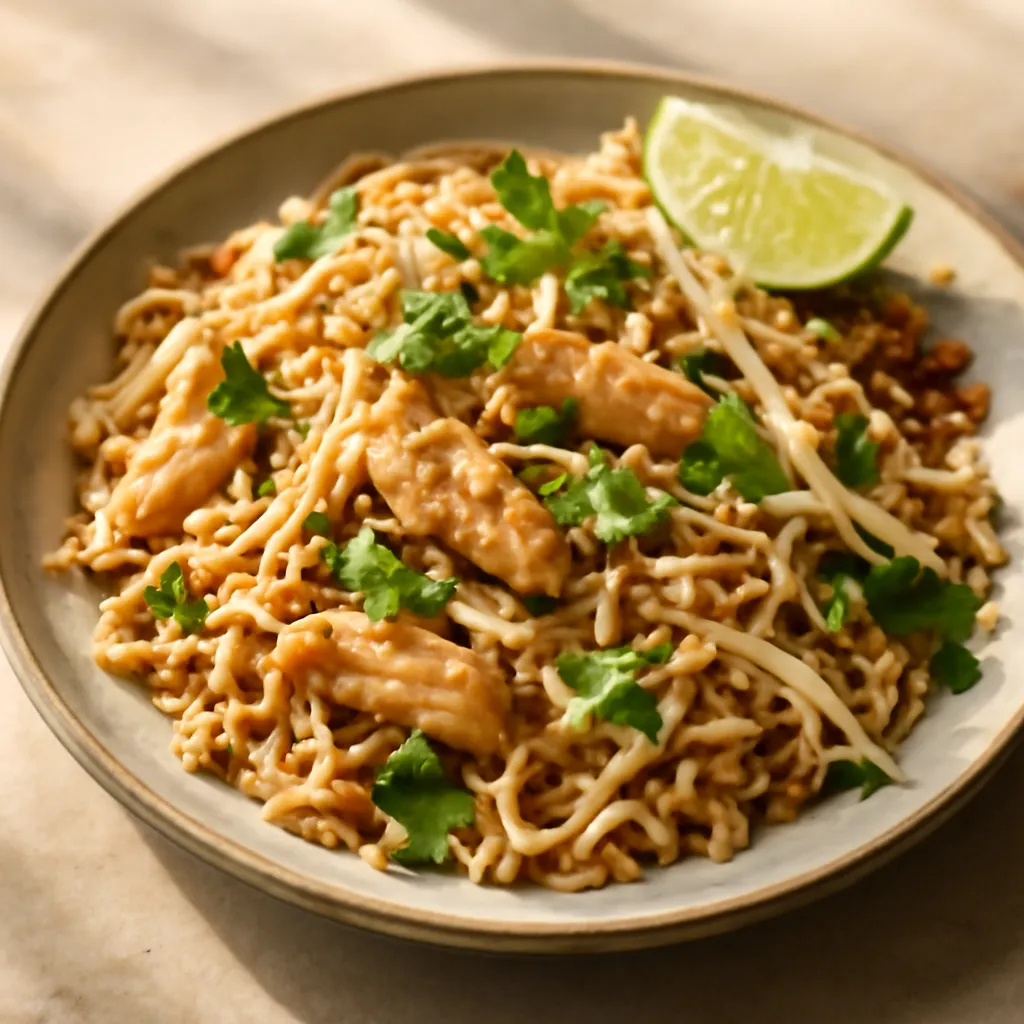
This is proper pad Thai: soaked rice noodles tossed in a glossy tamarind, fish sauce and palm sugar dressing, with chicken, egg, beansprouts and crushed peanuts. The trick is high heat and a quick toss, so nothing turns to mush. Finish with lime and chilli at the table.
Pad Thai lives or dies by its sauce — a proper balance of sour tamarind, salty fish sauce and mellow palm sugar. Get that right and everything else falls into place. Have all your ingredients chopped and lined up before the wok gets hot, because the cooking itself takes minutes and there’s no time to stop and chop halfway through.
Ingredients
Method
- Soak the rice noodles in warm (not boiling) water for 20 minutes until pliable but still firm with a slight bite — they'll finish cooking in the wok. Drain and set aside.
- Make the sauce: gently warm the tamarind paste, fish sauce and palm sugar in a small pan, stirring until the sugar dissolves. Taste — it should be sour, salty and sweet in roughly equal measure. Set aside.
- Heat 1 tablespoon oil in a wok over high heat. Add the chicken strips and stir-fry until golden and cooked through with no pink remaining, about 4 minutes. Tip onto a plate.
- Add the remaining oil to the wok, still on high heat. Fry the garlic and chilli flakes for 20 seconds until fragrant, then add the drained noodles and half the sauce. Toss constantly for 1-2 minutes until the noodles soften and soak up the liquid.
- Push the noodles to one side, pour the beaten egg into the space and let it set for a few seconds before scrambling it lightly, then fold it through the noodles.
- Return the chicken to the wok along with the spring onions, most of the beansprouts and the rest of the sauce. Toss everything together over high heat for 1-2 minutes until piping hot and glossy.
- Stir through most of the crushed peanuts. Pile onto plates and scatter with the remaining beansprouts, peanuts and coriander. Serve with lime wedges and extra chilli flakes on the side.
Serve it with
- Lime wedges
- Extra crushed peanuts
- Dried chilli flakes
- Thai fish cakes
- A crunchy green mango salad
Why this works
Soaking rather than boiling the noodles keeps them springy, so they finish cooking in the sauce instead of collapsing. Balancing tamarind, fish sauce and palm sugar in a pre-made sauce is what gives real pad Thai its signature sweet-sour-savoury tang.
Common swaps
- Swap chicken for peeled raw prawns, adding them at the same stage and cooking until pink and opaque.
- For a vegetarian version, use firm tofu and replace fish sauce with light soy plus a splash of extra lime.
- No tamarind? Use 2 tbsp lime juice with an extra teaspoon of sugar for a similar sour-sweet note.
- Rice noodles can be swapped for wide flat noodles, though the texture will be a little softer.
Common mistakes to avoid
- Over-soaking the noodles until soft — they should still have bite before they hit the wok, or you'll end up with mush.
- Cooking on too low a heat, which steams the noodles instead of frying them and leaves them claggy.
- Adding all the sauce at once so the noodles stew — build it up in stages and toss constantly.
- Crowding the wok with cold chicken, which drops the temperature and makes it release water rather than brown.
Storage, freezing & reheating
Storage: Best eaten fresh, but leftovers keep in an airtight container in the fridge for up to 2 days.
Reheating: Reheat in a hot wok or frying pan with a splash of water until piping hot throughout; microwaving tends to make the noodles rubbery.
Allergen notes: contains Fish, Egg, Nuts. Always check individual product labels.
Estimated nutrition
Per serving, estimated from typical ingredient values — not a substitute for precise dietary calculation.
| Calories | 540 kcal |
|---|---|
| Protein | 32g |
| Carbohydrate | 58g |
| Fat | 20g |