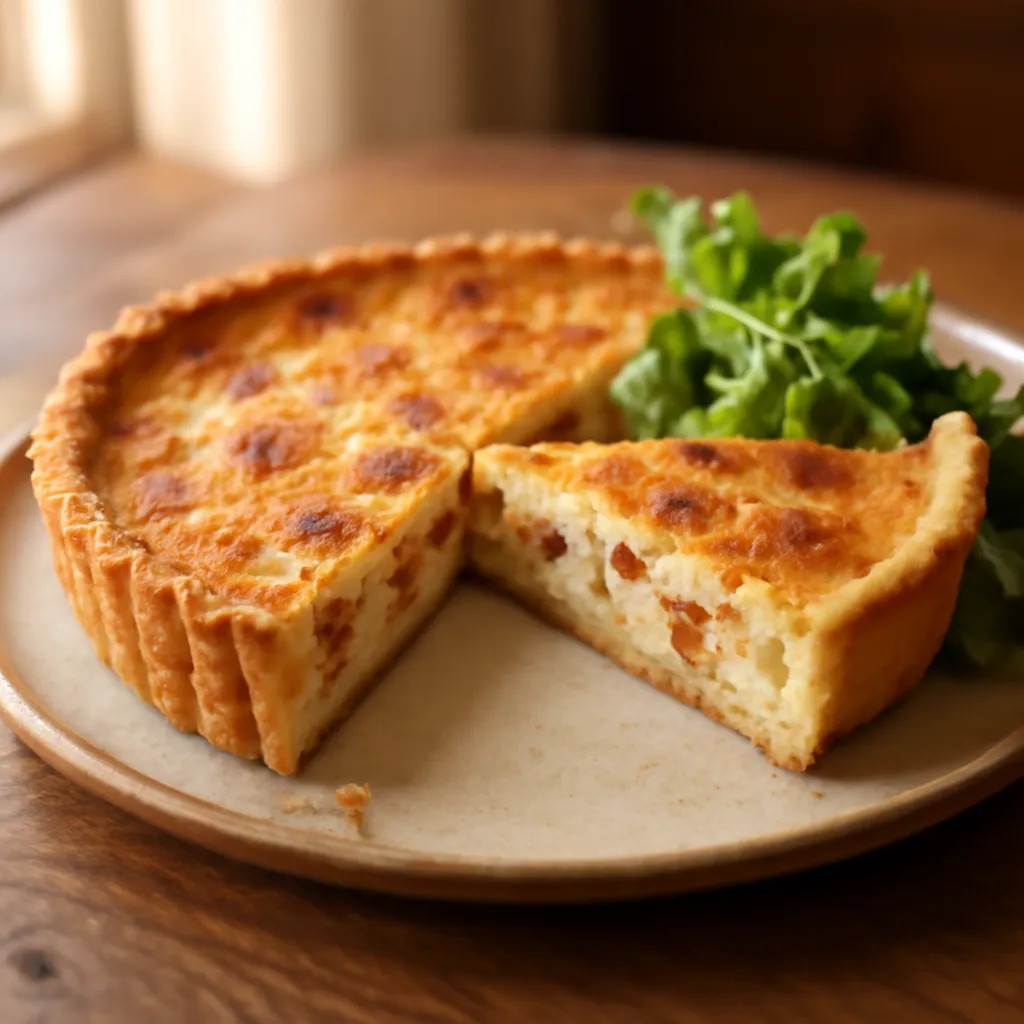
This is quiche Lorraine done the traditional way: a buttery blind-baked shortcrust shell filled with smoky bacon and a rich custard of eggs, cream and a little milk. No vegetables, no faff, just the classic combination baked until barely set and golden. Serve it warm or at room temperature for a lunch that always delivers.
Real quiche Lorraine is a study in restraint: eggs, cream, smoky bacon and good pastry, nothing more. The trick is a properly blind-baked base and a custard cooked gently so it stays soft and just set rather than rubbery. Get those two things right and you have a lunch that tastes far grander than the short shopping list suggests.
Ingredients
Method
- Heat the oven to 200C/180C fan/gas 6. Line a 23cm loose-bottomed tart tin with the pastry, leaving a little overhang, and prick the base all over with a fork. Chill for 10 minutes while the oven comes up to temperature.
- Line the pastry with baking paper and fill with baking beans or dried rice. Blind bake for 15 minutes, then lift out the paper and beans and bake for a further 5 to 7 minutes until the base looks dry and pale gold. Trim the overhang level with the rim.
- While the case bakes, melt the butter in a frying pan over medium heat and cook the bacon for 5 to 6 minutes until the fat has rendered and the pieces are lightly golden but not crisp. Lift onto kitchen paper to drain.
- Turn the oven down to 170C/150C fan/gas 3. Whisk the eggs, yolks, cream and milk together until smooth, then season with a little salt, white pepper and the nutmeg. Go easy on the salt, as the bacon and cheese are already salty.
- Scatter the bacon and most of the Gruyère over the base of the warm pastry case. Set the tin on a baking tray, then pour in the custard, filling it as high as you dare without spilling. Scatter over the last of the cheese.
- Carefully slide into the oven and bake for 30 to 35 minutes. The quiche is ready when the top is set and lightly golden but the very centre still has a gentle wobble; it should look just set with no liquid ripple when you nudge the tin.
- Rest in the tin for at least 15 minutes to finish setting and firm up cleanly. Serve warm or at room temperature, cut into generous wedges.
Serve it with
- Dressed green salad with a sharp mustard vinaigrette
- Crusty baguette
- Cornichons and a little Dijon
- A glass of chilled dry white wine
- New potatoes tossed in butter and chives
Why this works
The blend of whole eggs and extra yolks with cream sets into a soft, custardy filling rather than a firm omelette, while blind baking and a warm pastry case keep the base crisp under the wet filling. Baking low and slow stops the custard from splitting or turning spongy.
Common swaps
- Use pancetta or good gammon in place of streaky bacon
- Swap Gruyère for Comté or Emmental, or leave the cheese out for a purist version
- Replace 50ml of the cream with crème fraîche for a slight tang
- Add a handful of softened sliced onion with the bacon for a quiche Alsacienne style
Common mistakes to avoid
- Skipping the blind bake, which leaves the base pale and soggy
- Over-salting the custard before accounting for salty bacon and cheese
- Baking too hot, which puffs the filling and makes it split and turn rubbery
- Cutting into it straight from the oven before it has set and rested
Storage, freezing & reheating
Storage: Keep covered in the fridge for up to 3 days. Bring back to room temperature or reheat before serving for the best texture.
Freezing: Freezes well: wrap whole or in slices and freeze for up to 2 months. Defrost fully in the fridge before reheating.
Reheating: Reheat in a 160C fan oven for 10 to 15 minutes until piping hot through the centre; avoid the microwave, which softens the pastry.
Allergen notes: contains Milk, Gluten, Egg. Always check individual product labels.
Estimated nutrition
Per serving, estimated from typical ingredient values — not a substitute for precise dietary calculation.
| Calories | 540 kcal |
|---|---|
| Protein | 16 g |
| Carbohydrate | 24 g |
| Fat | 42 g |