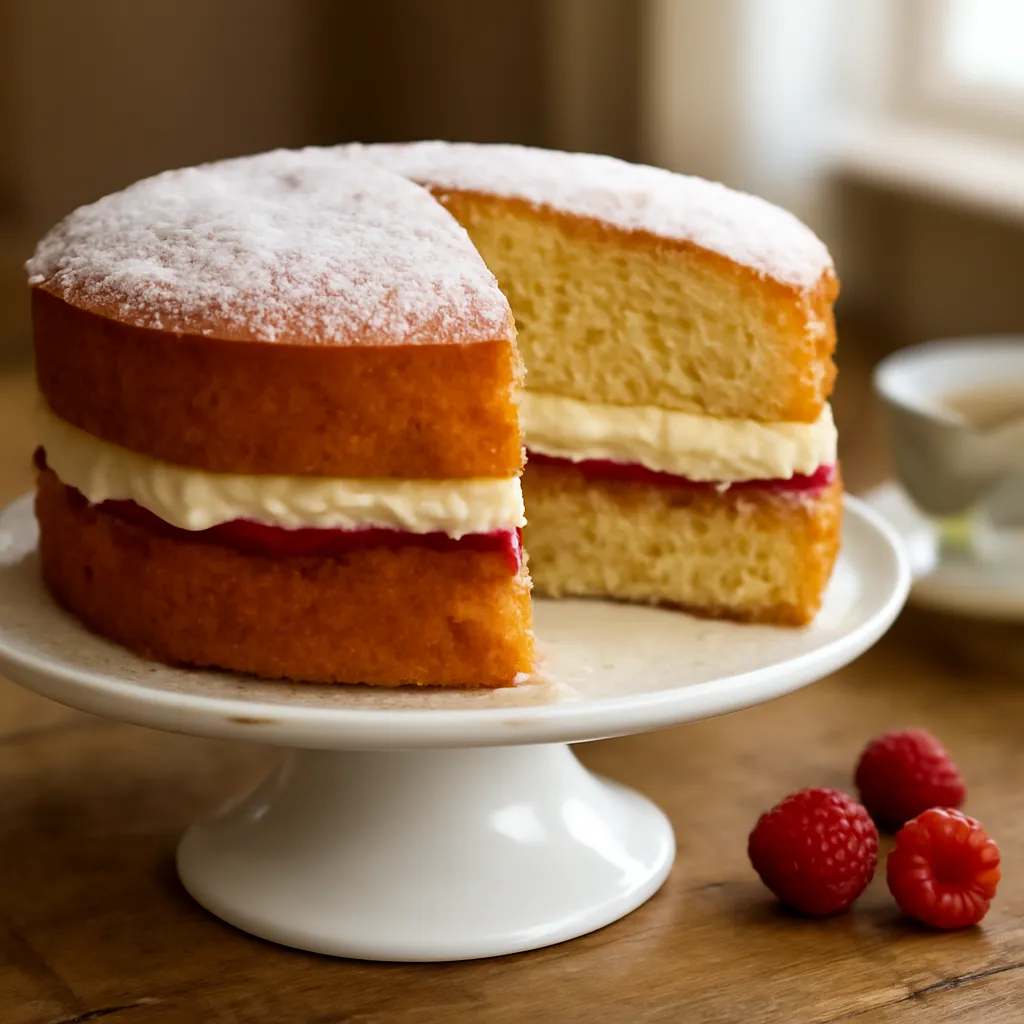
This is the classic British afternoon-tea sponge: two golden, feather-light cakes sandwiched with raspberry jam and softly whipped cream. The all-in-one method skips the fuss of creaming, so it's forgiving enough for beginners but delivers a bakery-worthy result.
The Victoria sponge is the benchmark British bake: soft, buttery and gently sweet, with a jammy, creamy middle. This all-in-one version weighs the fat, sugar and flour equally so it’s near-impossible to get wrong. Use soft butter and room-temperature eggs, and you’ll have two beautifully even layers ready to fill and dust.
Ingredients
Method
- Heat the oven to 180C/160C fan/gas 4. Butter two 20cm sandwich tins and line the bases with baking paper.
- Put the softened butter, caster sugar, flour, eggs, baking powder and vanilla into a large bowl. Beat with an electric whisk for 1-2 minutes until you have a smooth, soft batter that drops easily off the beaters; add the milk a splash at a time only if it feels stiff.
- Divide the batter equally between the tins and level the tops with a spatula. Weighing the tins gives you two matching layers.
- Bake in the centre of the oven for 22-25 minutes, until risen, golden and springy to the touch, and a skewer comes out clean. Don't open the door for the first 20 minutes.
- Cool in the tins for 5 minutes, then turn out onto a wire rack, peel off the paper and leave to cool completely.
- Whip the double cream to soft peaks. Spread the jam over one cake, then spread or pipe the cream on top of the jam.
- Sit the second cake on top, press gently, and dust with icing sugar just before serving.
Serve it with
- A pot of proper English breakfast tea
- Fresh raspberries or sliced strawberries
- A spoonful of clotted cream on the side
- A glass of chilled elderflower cordial
Why this works
Equal weights of butter, sugar, flour and eggs give a perfectly balanced batter, while the all-in-one method traps air quickly and evenly for a light, tender crumb without overworking the gluten.
Common swaps
- Use lemon curd instead of jam for a zesty twist
- Swap the cream for buttercream if you'd prefer it to keep longer
- Add the finely grated zest of a lemon to the batter for a citrus lift
- For a dairy-free version, use a plant-based block and whippable cream
Common mistakes to avoid
- Using cold, hard butter or fridge-cold eggs, which stops the batter coming together smoothly
- Overbeating once combined, which knocks out air and gives a dense sponge
- Opening the oven door too early, causing the cakes to sink in the middle
- Filling the cakes while still warm, so the cream melts and slides out
Storage, freezing & reheating
Storage: Keep the filled sponge in an airtight container in the fridge for up to 2 days; bring to room temperature before serving. An unfilled sponge keeps at room temperature for up to 3 days.
Freezing: The unfilled, cooled sponges freeze well: wrap each layer tightly and freeze for up to 2 months. Defrost at room temperature, then fill and dust.
Allergen notes: contains Milk, Gluten, Egg. Always check individual product labels.
Estimated nutrition
Per serving, estimated from typical ingredient values — not a substitute for precise dietary calculation.
| Calories | 490 kcal |
|---|---|
| Protein | 6 g |
| Carbohydrate | 52 g |
| Fat | 29 g |